A contemporary homage to vernacular design
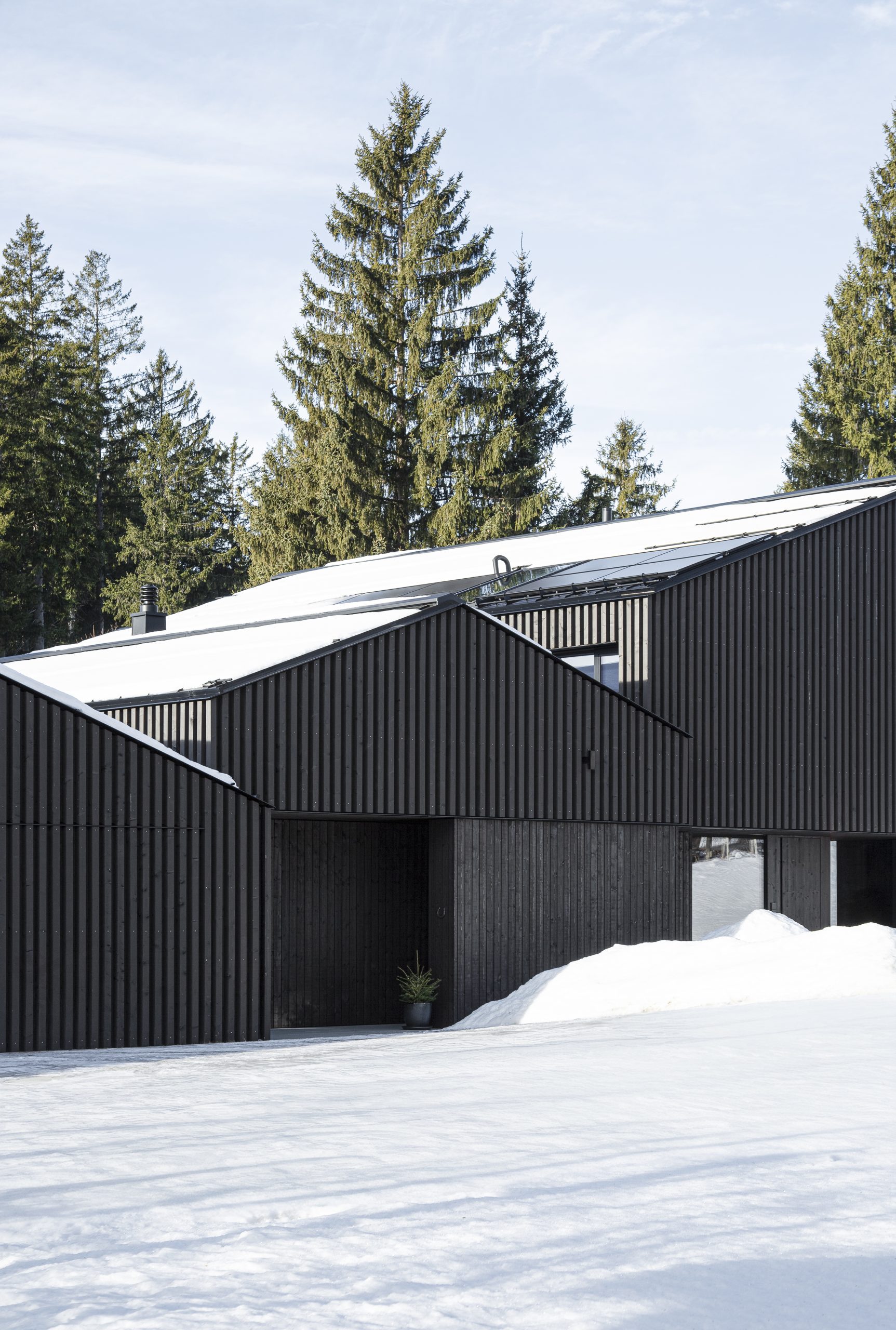
Set on a hillside at the edge of a Slovenian village, the Black Barn reinterprets the traditional hayrack in a modern architectural language. Designed as a multifunctional facility, the building supports both agricultural activities—such as storing honey and drying fruit—and serves as a gathering space for family and professional events. Positioned to conclude the village’s built fabric, it forms a grassy courtyard ensemble with the existing residence and pavilion.


Structural clarity and bold proportions
Referencing the iconic double hayrack, the Black Barn uses four robust concrete pillars and a twelve-meter spanning bridge structure to achieve an open plan on the ground and attic levels. This structural strategy permits large, column-free interiors suitable for flexible use. The reinforced concrete core and steel roof structure allow the building to meet both utilitarian and representational demands, aligning with the architectural purity often attributed to historical hayracks.


Material dialogue with the surroundings
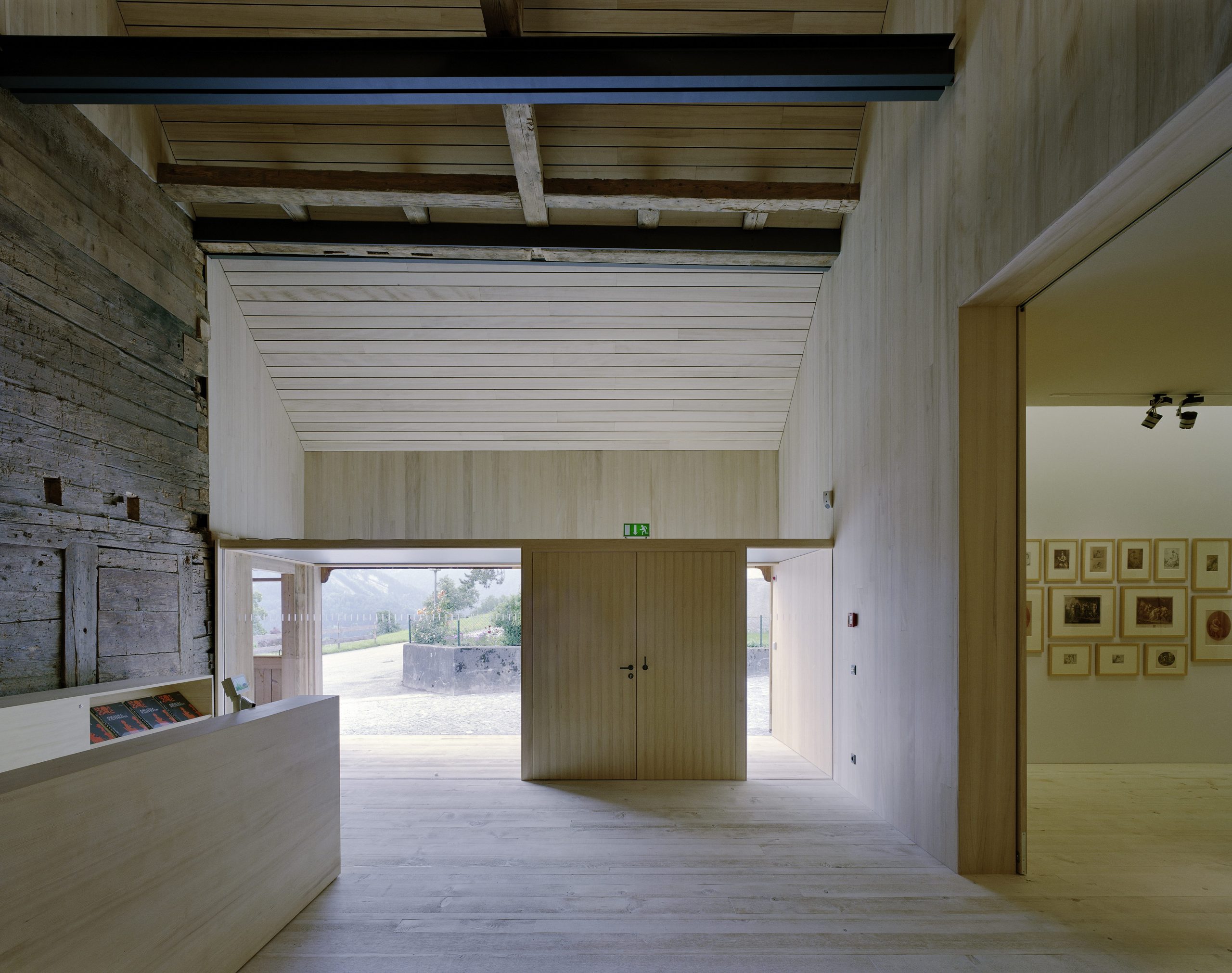
The dark-stained wooden facade mirrors the character of nearby barnhouses while integrating photovoltaic panels almost imperceptibly. The expansive sliding glass doors on the ground floor blur the line between interior and exterior, inviting the surrounding landscape into the building’s social spaces. Inside, bright ash paneling offers a soft contrast, reinforcing the impression of a space carved from solid timber.

Symbolic gesture and architectural refinement
While serving practical agricultural purposes, the building also stands as a respectful nod to Slovenian heritage. Its restrained material palette, carefully proportioned spaces, and expressive spans embody the monumental simplicity of traditional rural architecture. The result is a dignified and functional landmark that harmonizes with its pastoral setting.
Project Gallery