Multigenerational and multifunctional
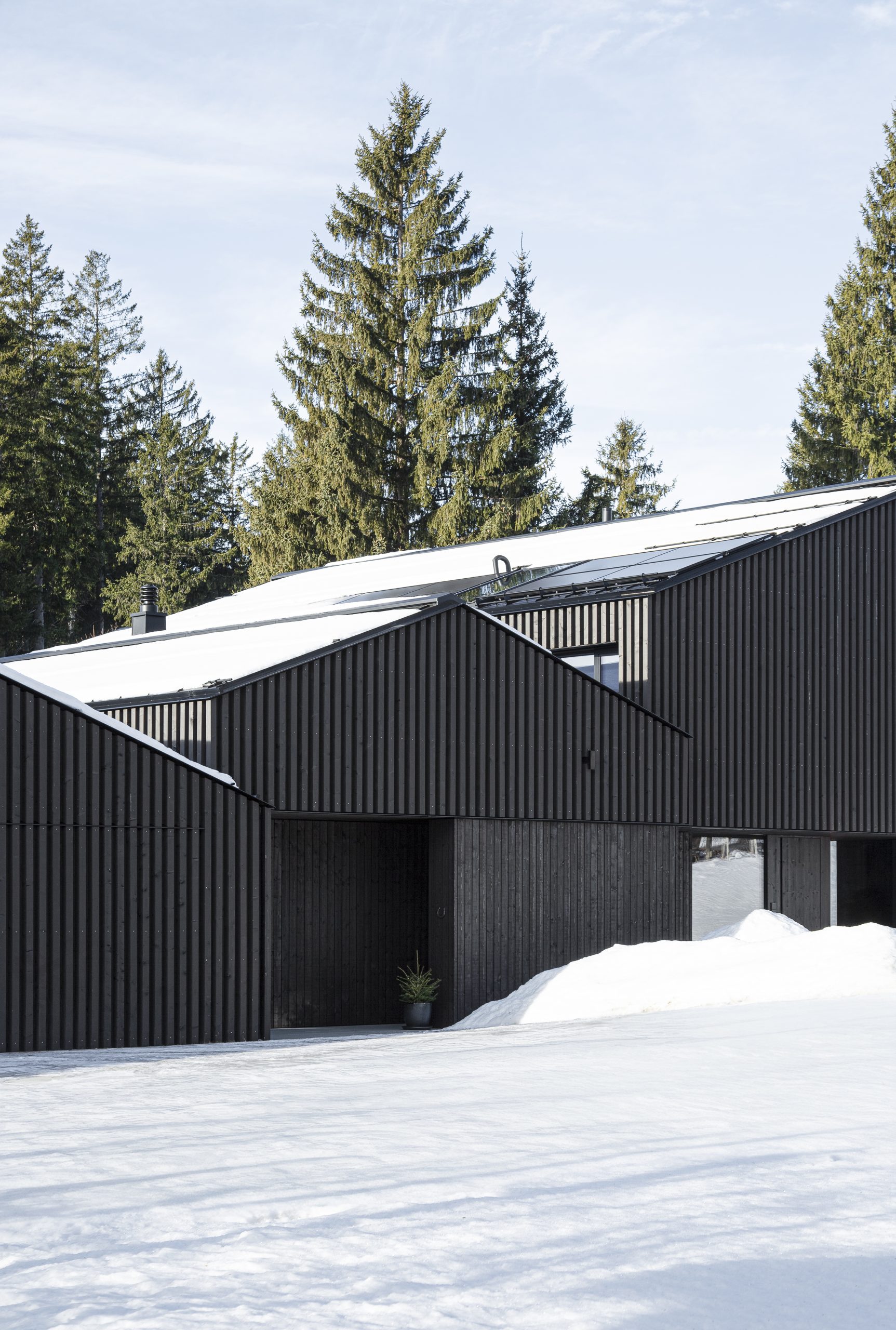
The Leander House was developed as a collaboration between Andreas Gruber Architekten and artist Leander Schwazer, resulting in a three-storey building that unites living and working spaces for three generations. Situated in a forest clearing, the structure maintains a respectful dialogue with neighbouring farm buildings. Together, they form a thoughtful ensemble intended as a reference model for future architectural approaches in rural contexts.

Inspired by sculpture
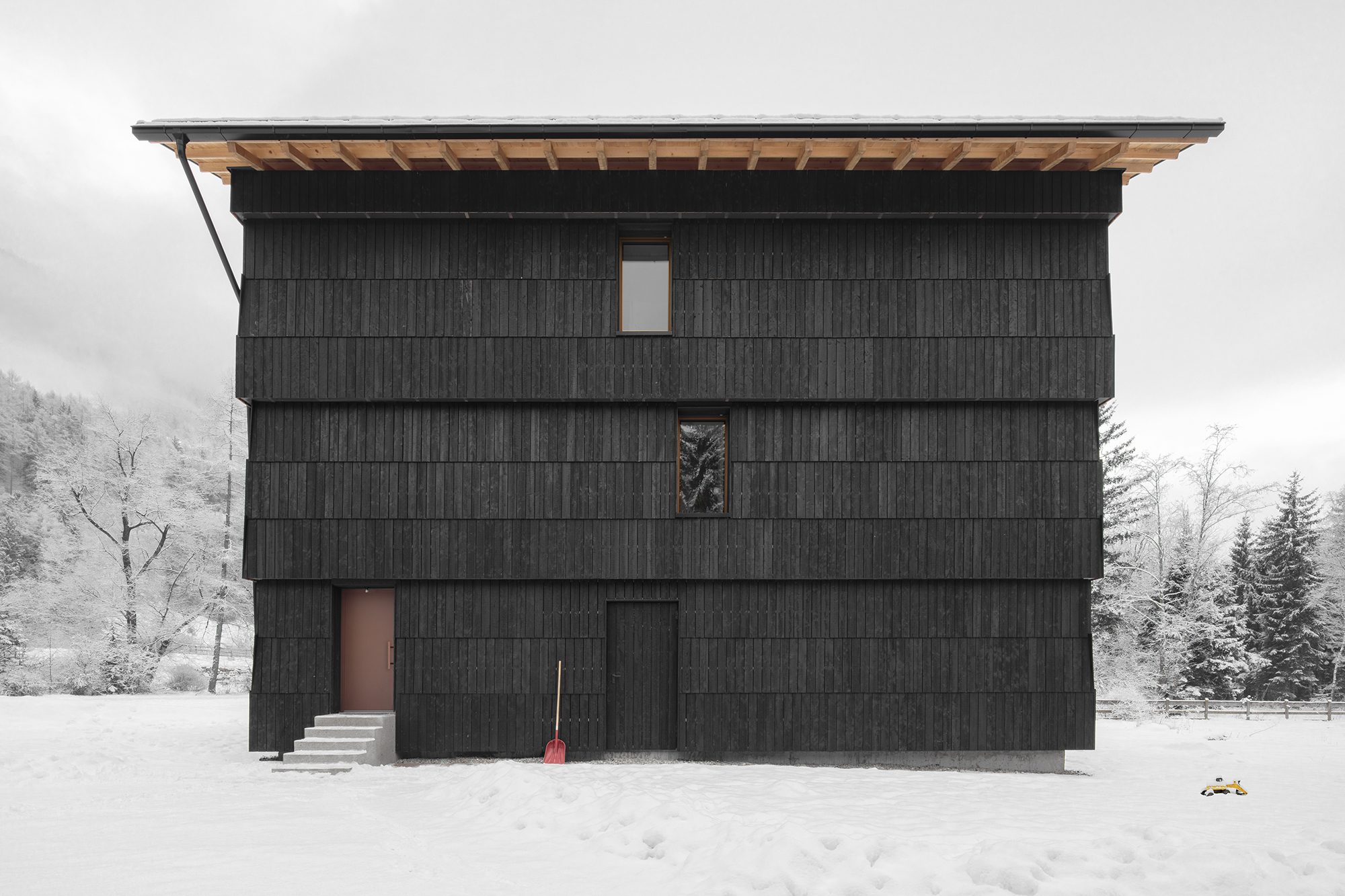
The concept draws from Brancusi’s infinite column, reflected in the building’s vertical articulation and sense of upward motion. This aspiration toward continuity is visually accentuated by a facade that reaches skyward but is grounded by a traditional gabled roof. The result is a design that balances abstraction with Alpine vernacular references.


Material honesty and contextual response
The facade is clad in timber with a black carbonised finish, allowing the building to visually resonate with its forest surroundings. The primary structure is made of ecological mineral bricks, offering both durability and sustainable performance. Elevated on a mineral plinth due to groundwater conditions, the house is accessed by a concrete staircase. The absence of a basement is compensated by repurposing nearby existing buildings for storage and utility.

A synthesis of disciplines
This architectural intervention does more than provide shelter—it weaves together artistic intent, ecological sensitivity, and spatial pragmatism. The Leander project creates a site-specific response that reflects both its physical and cultural landscape, forming a unique residential and creative habitat in the South Tyrolean woods.
Project Gallery