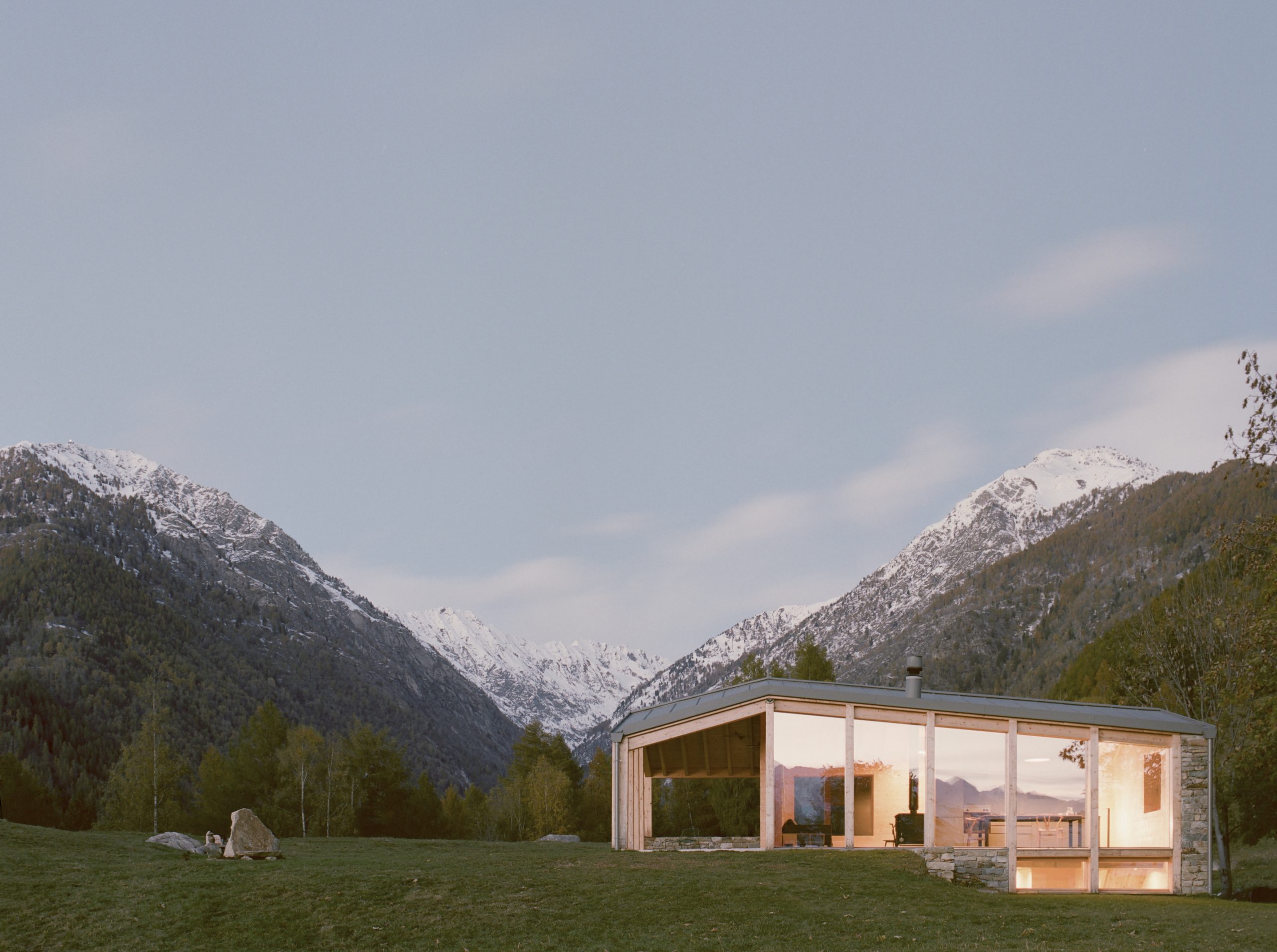
Location: Männedorf, Zurich, Swiss Alps
Year: 2022
Architecture: Lukas Lenherr
Photography: Florian Amoser
A lightweight structure inside a historic frame
Inside an 1850s barn, a new ultra-thin timber construction has been inserted with precision. Six visible spruce frames now carry both structural and spatial roles: initially supporting the old barn during its transformation, and ultimately shaping the interior. Stabilized by intersecting wood panels, the system defines rooms and circulations through vertical and horizontal connections that run from the ground floor to the roof.


Fluid living through vertical transparency
The internal spaces recall the linear logic of an American Shotgun House—rooms flow into each other across all three levels. Openings, internal flaps, and framed views offer visual continuity between zones. Catamaran nets span across voids, creating playful areas of rest or retreat. Below, a workshop in the basement connects back to the main structure via skylights, emphasizing the spatial openness of the entire timber volume.


A barn that reveals itself gradually
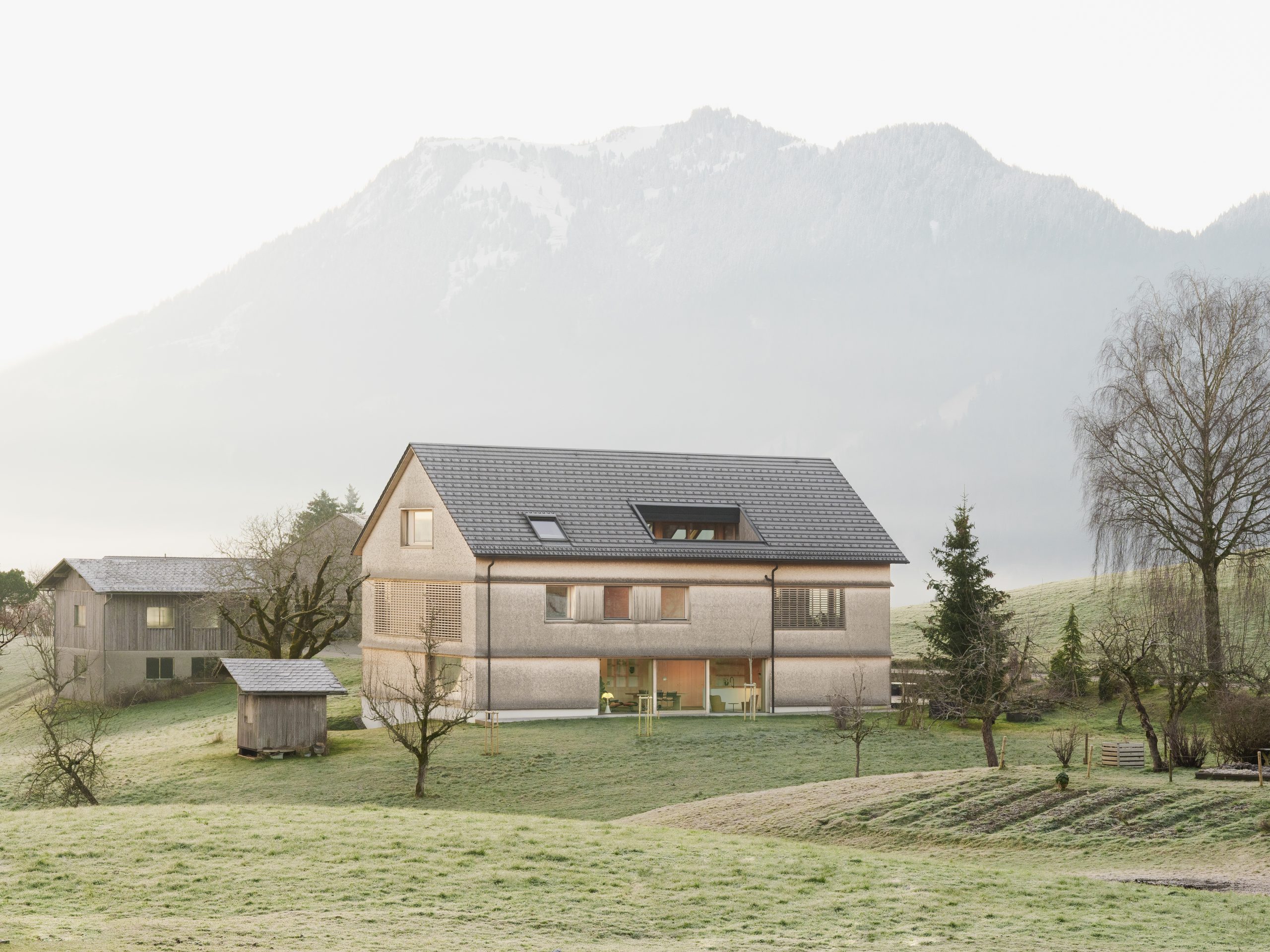
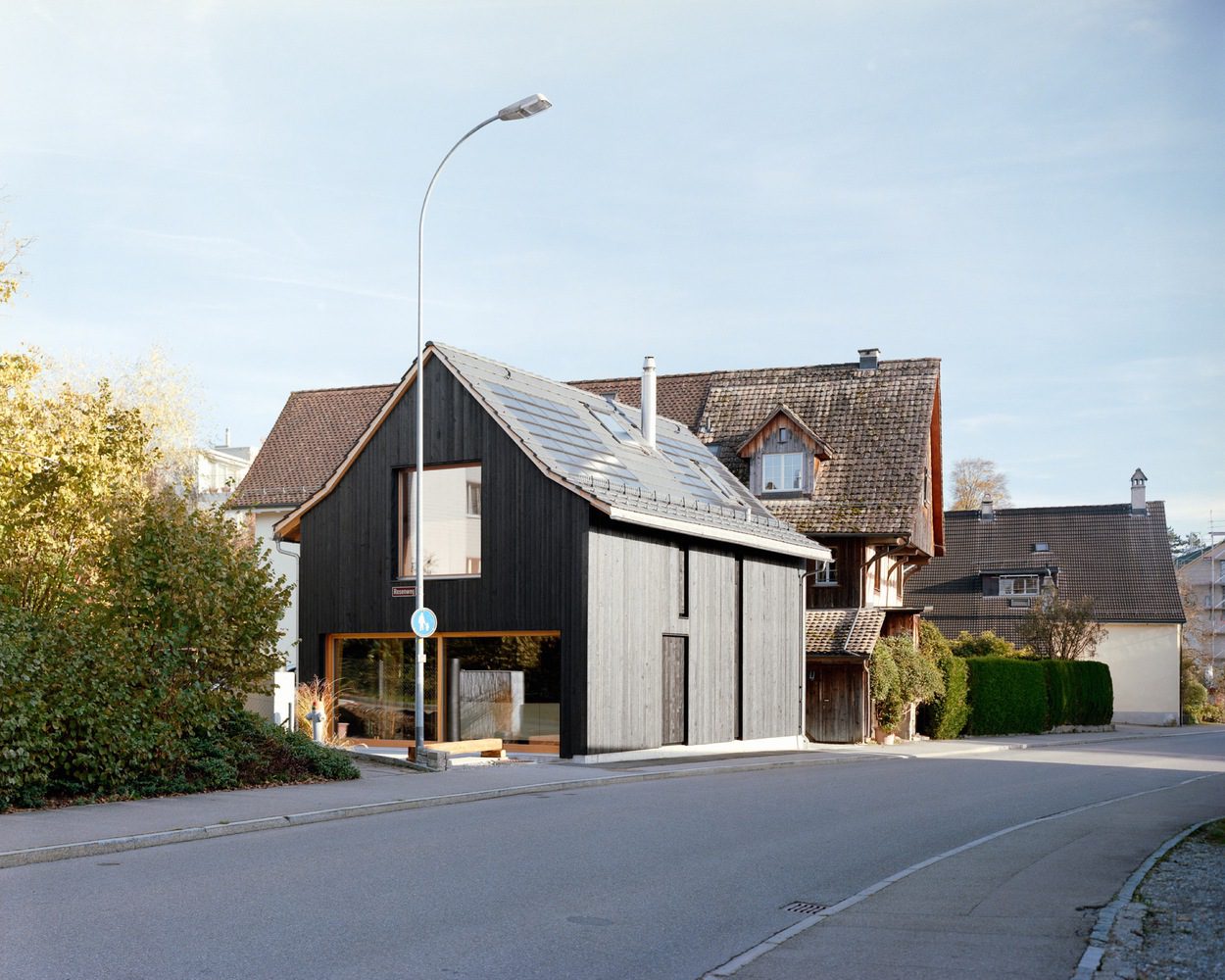
Despite the complete internal transformation, the barn retains its original silhouette and volume. Clad in charred silver fir using the Yakisugi method, the new facade quietly signals its age-resisting resilience. From a distance, the building blends with the protected ensemble of the backyard; only closer inspection reveals its new residential function, hinted at by subtle window reveals and black wooden slats.
Light control through moveable elements
On two facades, manually adjustable timber slats mask and reveal windows depending on light needs and privacy. These details deepen the dual character of the building—preserving its agricultural legacy while accommodating modern living. The fine balance of opacity and transparency, openness and retreat, is carefully managed by a timber architecture that remains both present and discreet.
Project Gallery