Location: Schwarzenberg, Vorarlberg, Austria
Year: 2007
Architecture: Dietrich Untertrifaller
Photography: Bruno Klomfar
A Historic Shell with Modern Purpose
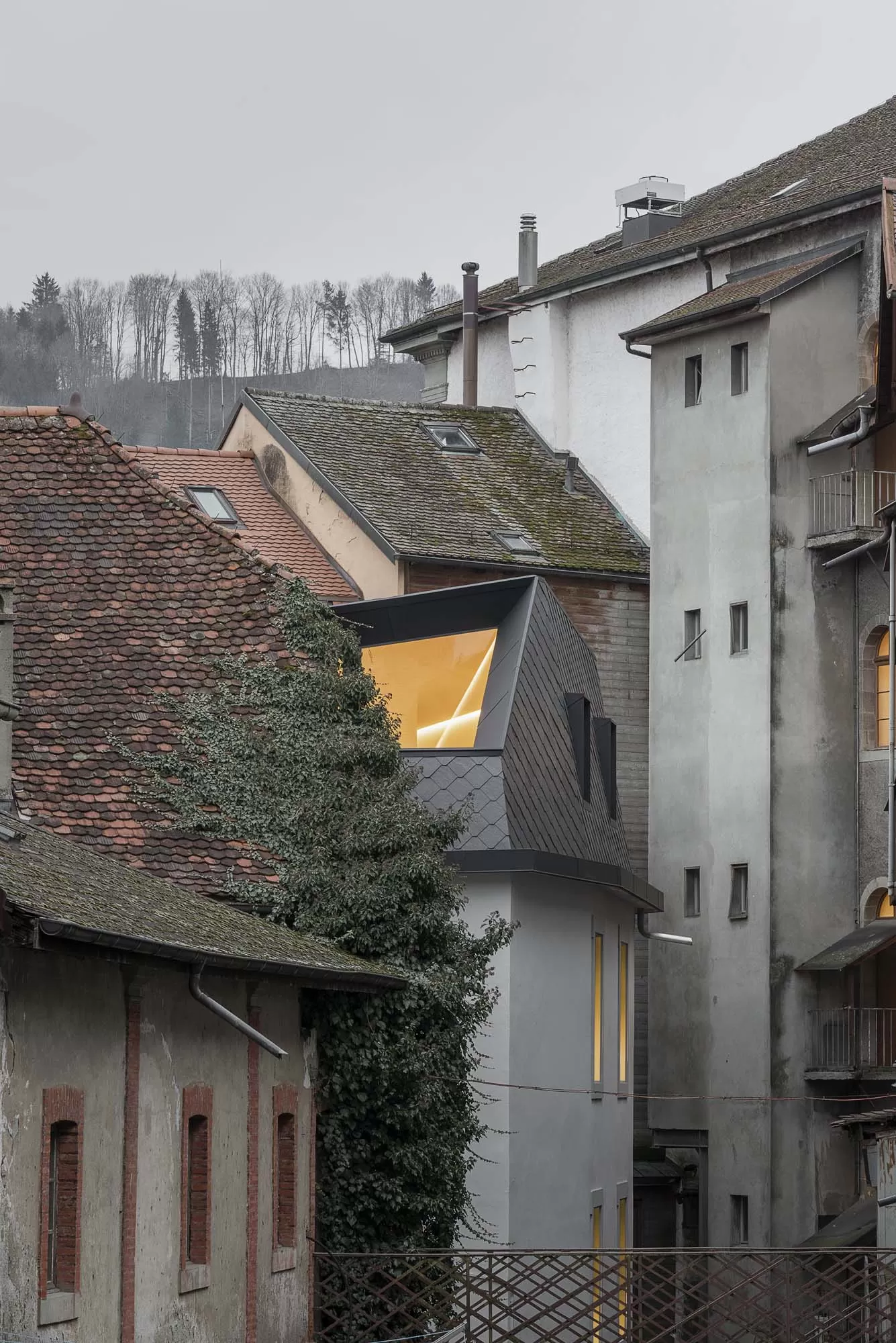
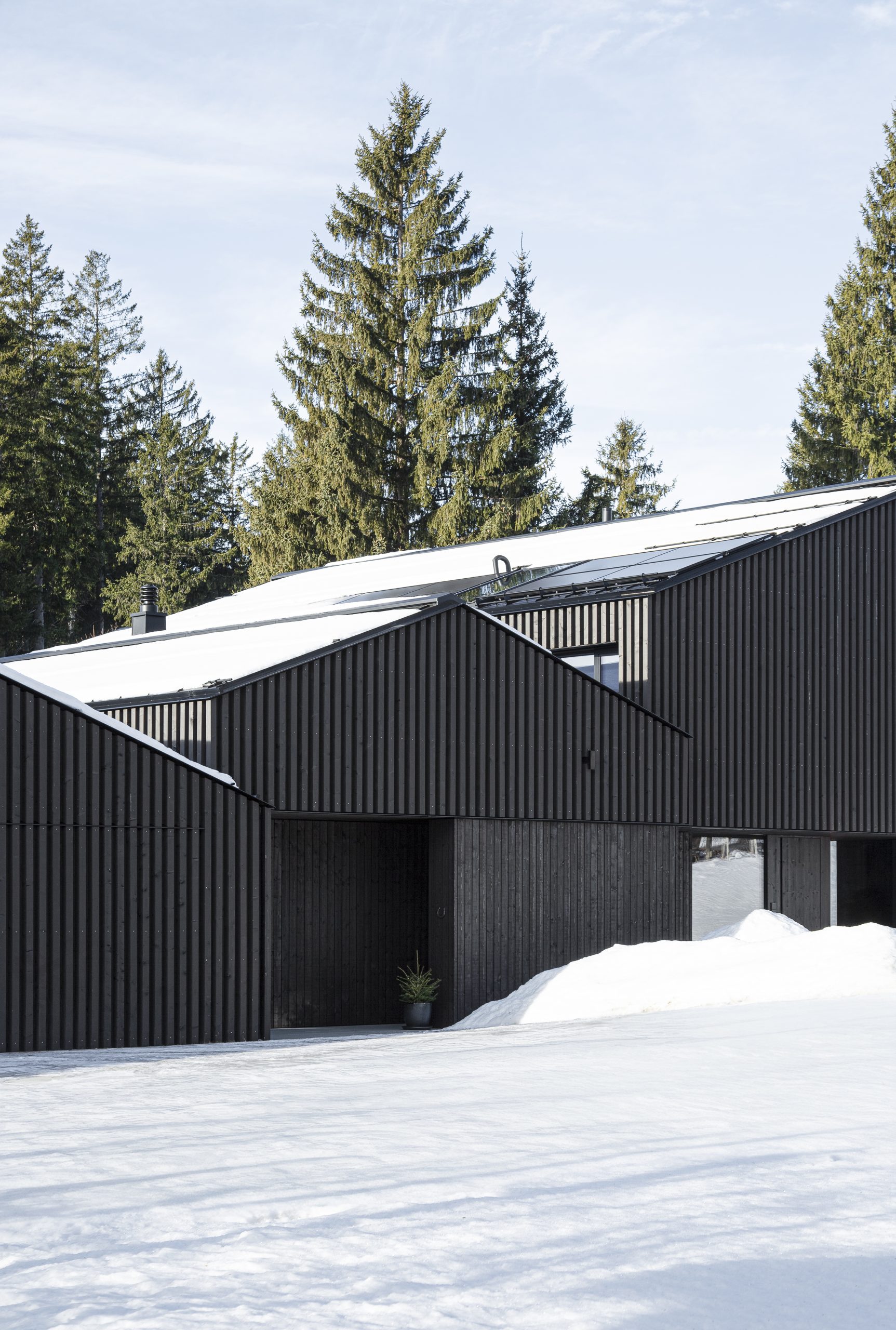
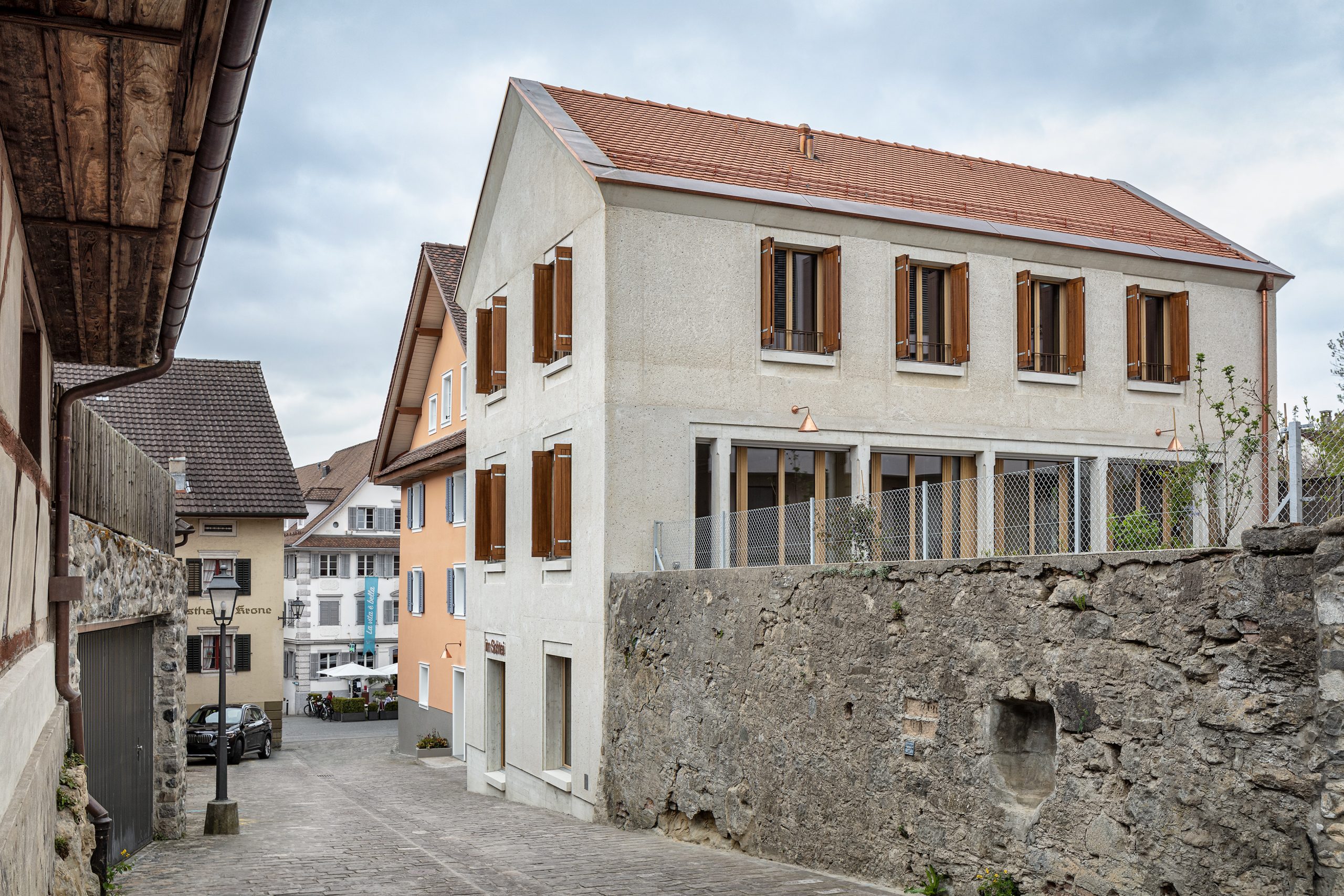
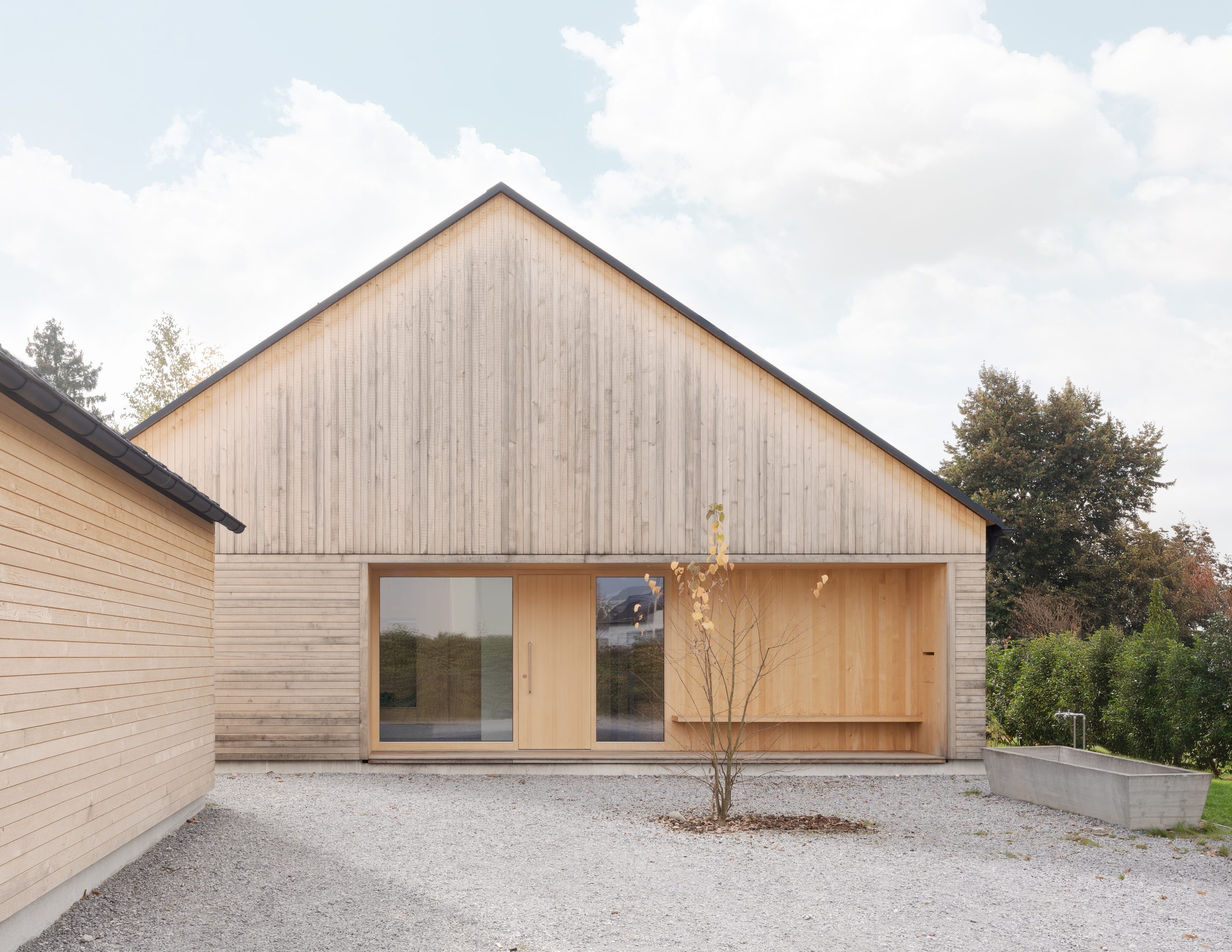
On a hillside west of Schwarzenberg’s village centre, a 16th-century Wälderhaus now houses two museums. The former living quarters serve as a local history museum, while the new Angelika Kauffmann Museum occupies the old agricultural wing. Accessed through the barn’s threshing floor, the museum’s entrance is marked by a wide sliding partition: when open, it reveals a modern wood-and-glass interior; when closed, the historic facade remains untouched. This thoughtful integration preserves the building’s character while introducing a new cultural function.


Architectural Dialogue and Craftsmanship
The exhibition hall, designed as a flat-roofed “house within a house,” sits within the barn’s original structure. Space-defining elements reference the building’s agricultural past, creating a sophisticated interplay between old and new. Local craftsmen, skilled in both traditional techniques and modern technology, ensured every detail aligns with the house’s centuries-long history. The result is a harmonious fusion of heritage and innovation, where each element contributes to the building’s evolving narrative.


Contrast and Continuity in the Foyer
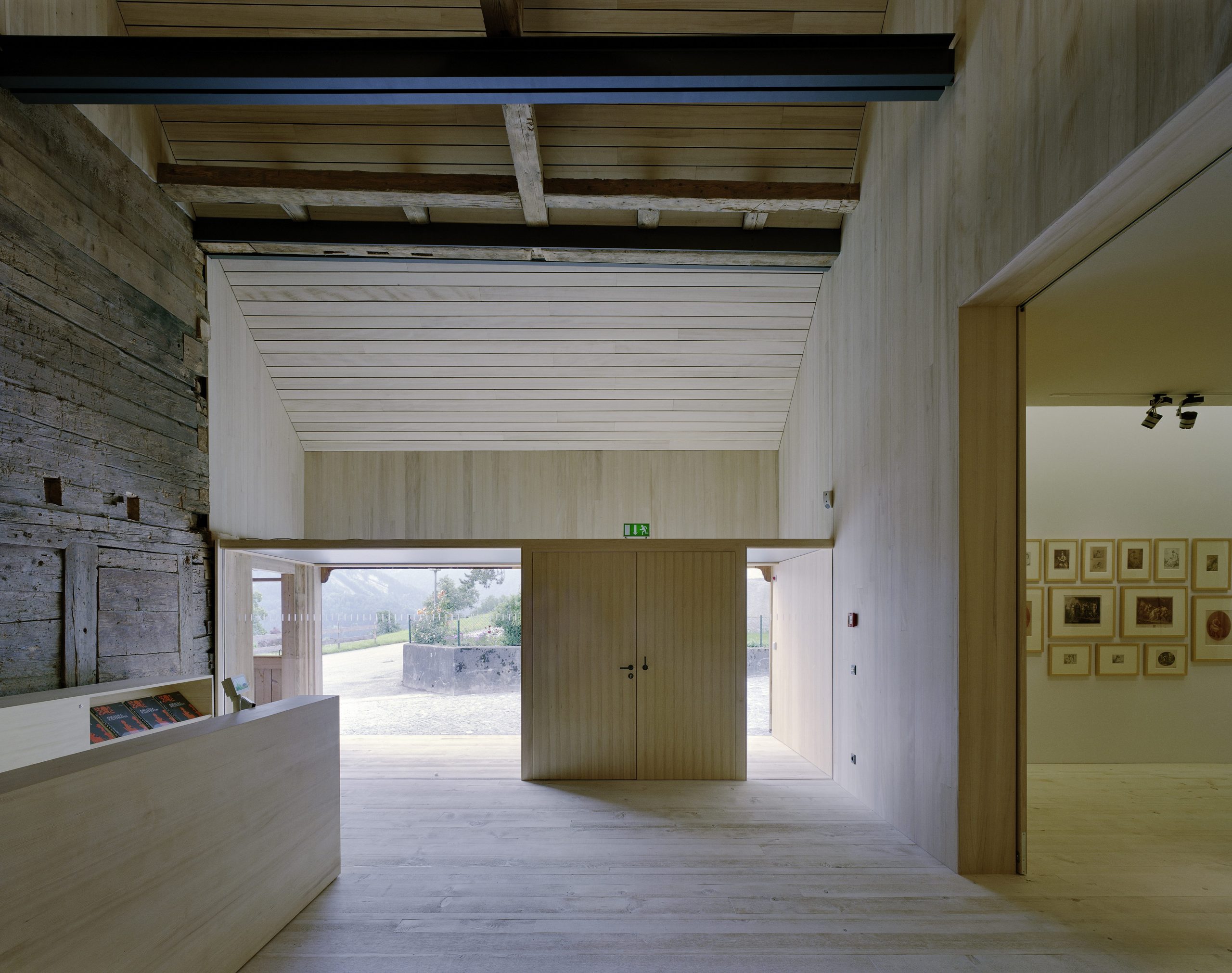
A nine-metre-high foyer, extending to the roof, lies behind a expansive glass wall, evoking the open gate of the barn. Here, light-coloured silver fir fixtures contrast with the dark rear wall and ancient roof beams, while steel profiles—distinct from the original timberwork—support the roof. The floor, made of rough-sawn fir planks, flows seamlessly from the entrance into the exhibition hall, unifying the spaces. This careful balance of materials and forms highlights the building’s layered history.


Innovation Hidden in Tradition
The exhibition hall’s column-free design required a thermally insulated structure decoupled from the facades, with lateral steel frames transferring loads to the floor. Three shallow niches and glazed slits in the walls offer glimpses of the original fabric. Technical systems, including ventilation and lighting, are discreetly integrated—ventilation slits resemble gaps rather than installations, and lighting is controlled from the foyer. Despite these modern interventions, the building’s exterior remains largely unchanged, adhering to strict preservation guidelines.
Project Gallery