Location: Appenzell, Appenzell Innerrhoden, Swiss Alps
Year: 2015
Architecture: Ruch und Partner
Photography: Filippo Simonetti
Cross-ridge typology reinterpreted
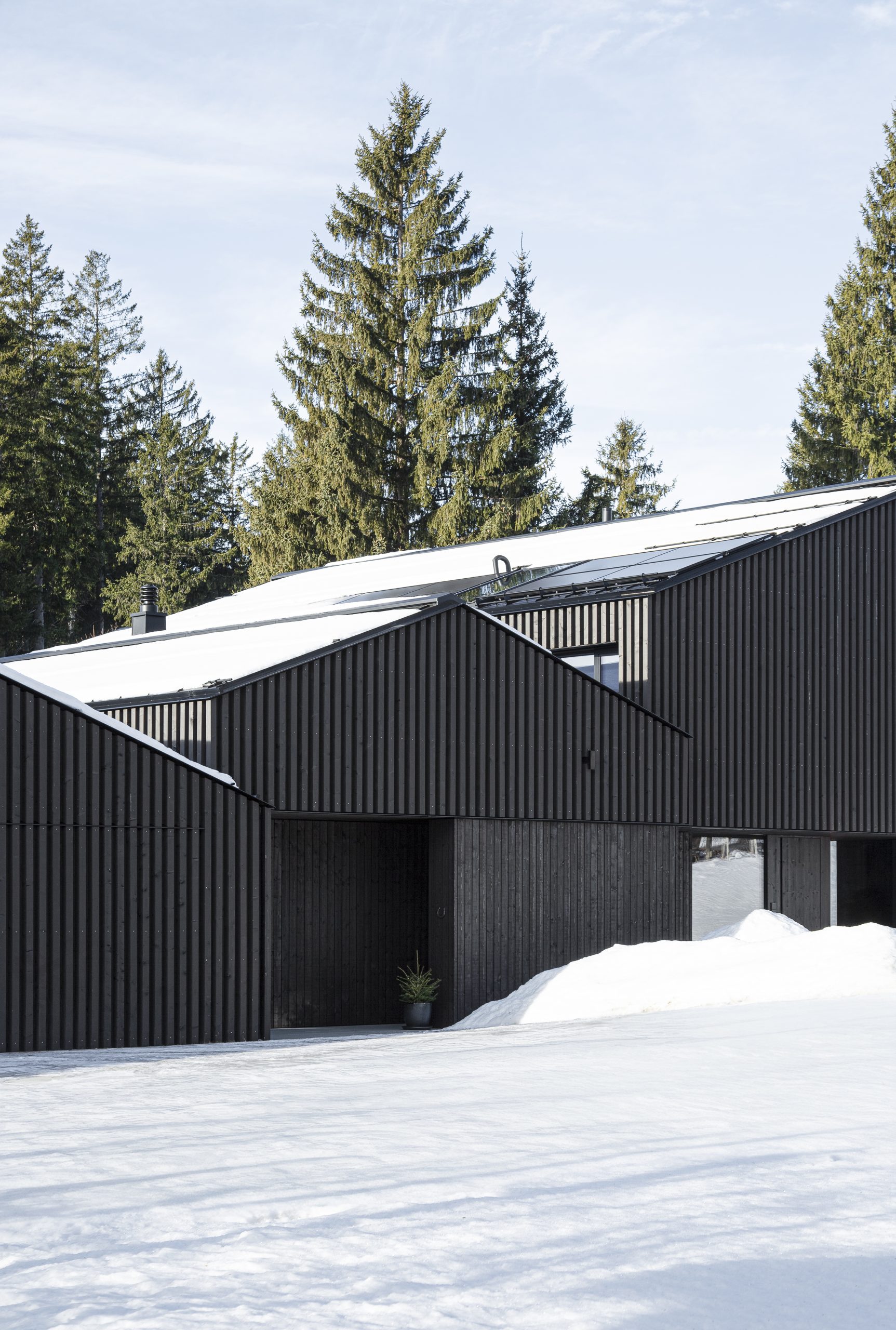
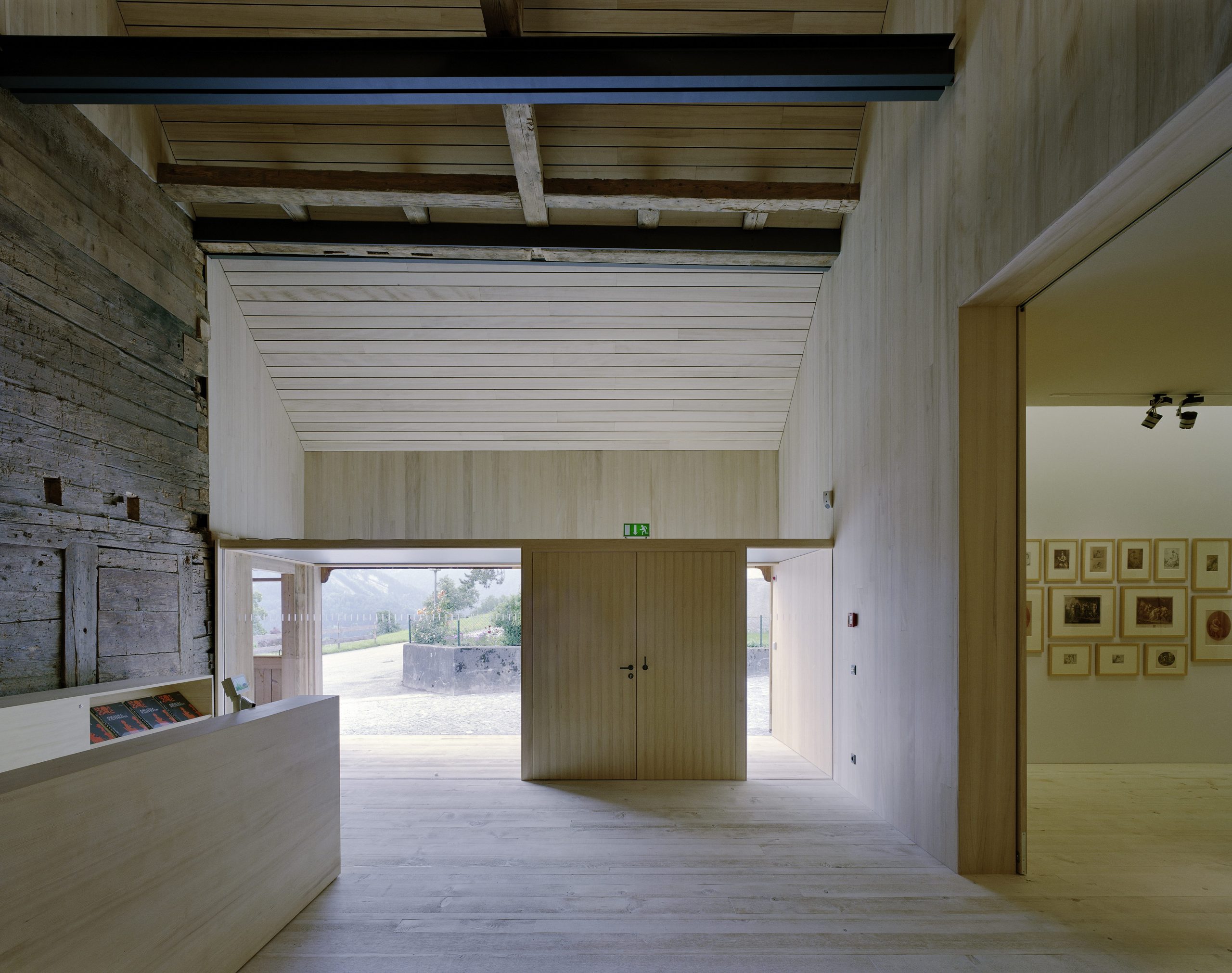
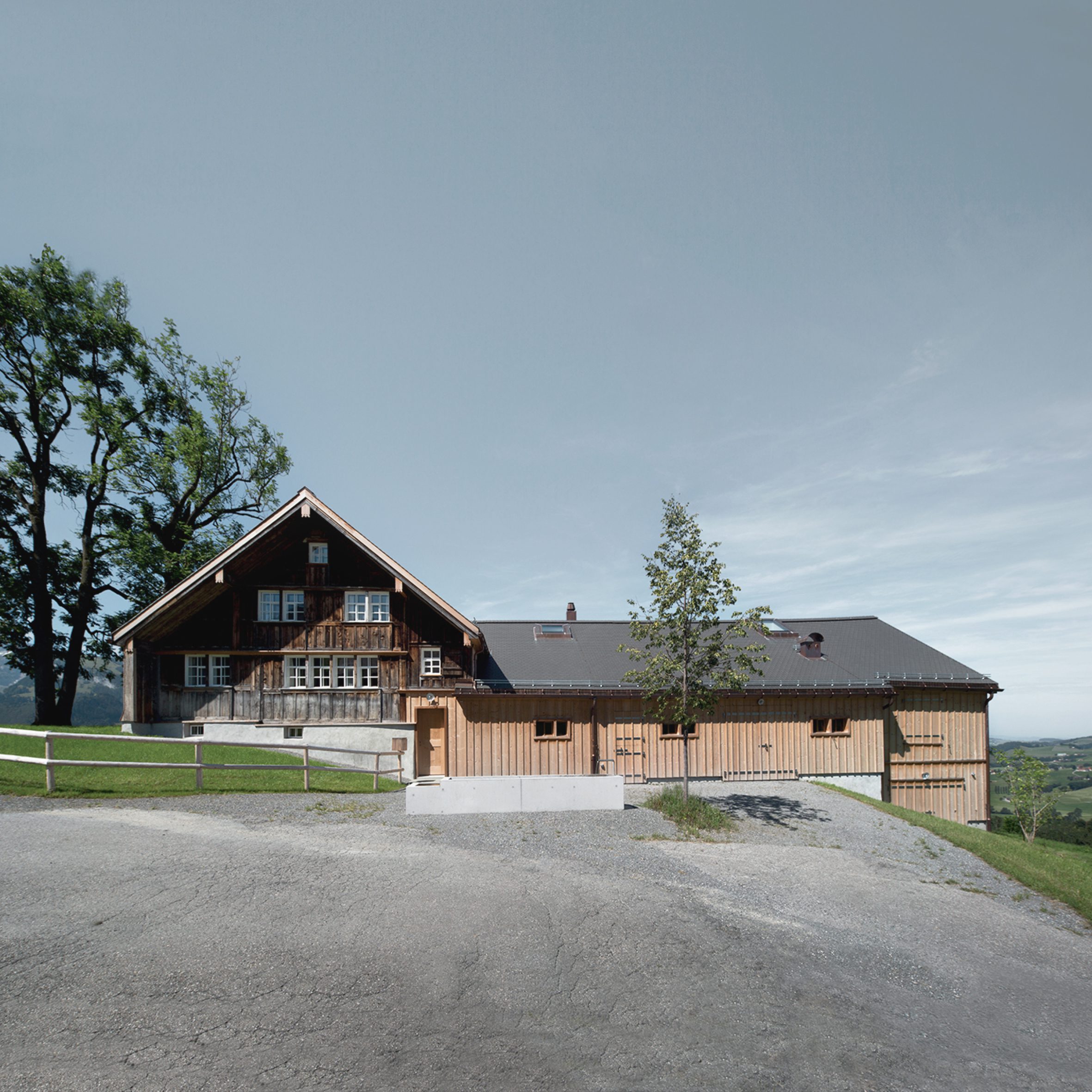
Located on the western slope of the Fänerenspitz, the Eugst farmhouse was originally built in 1685. With a gable-fronted main residence and an attached lengthwise barn, the structure exemplifies the cross-ridge house typical of the Appenzellerland. In 2015, new living space was added by extending into the former agricultural volume, carefully working within local building regulations. The two former cowsheds—with their hipped haylofts in traditional wooden block construction—now house black timber volumes, inserted with precision.

Interplay of views and volumes
Deliberately placed window openings in the new sections allow for cross-views between the contemporary living areas and the preserved stable structure. On the ground floor, two large west-facing windows provide daylight and broad views over the Appenzell landscape. An existing concrete septic tank structure was transformed into a raised terrace and viewing deck, its surface covered in conically cut larch planks—adding both a functional and spatial extension to the home.


Preservation meets reinterpretation
A key focus of the restoration was the conservation of the eastern facade, complete with its 19th-century vertical paneling and original sliding shutters. Plastic-framed windows from the 1990s were replaced with wooden casement models, true to the historical design. This care for original details was balanced by updates to the other facades, now clad in spruce shingles and board siding that continue the regional building language.

Protection and weather resilience
Windows exposed to prevailing winds were fitted with sliding shutters, while two large wooden sliding doors provide further protection from heavy rainfall and the area’s frequent “Föhn” storms. These functional additions demonstrate how traditional craft and climatic adaptation are interwoven into the architectural identity. The result is a project that blends conservation, utility, and a quiet architectural clarity.
Project Gallery