Location: Achental, Tirol, Austria
Year: 2025
Architecture: Florian Bauer
Photography: Alex Schidlbauer
Built within rules, designed for calm.
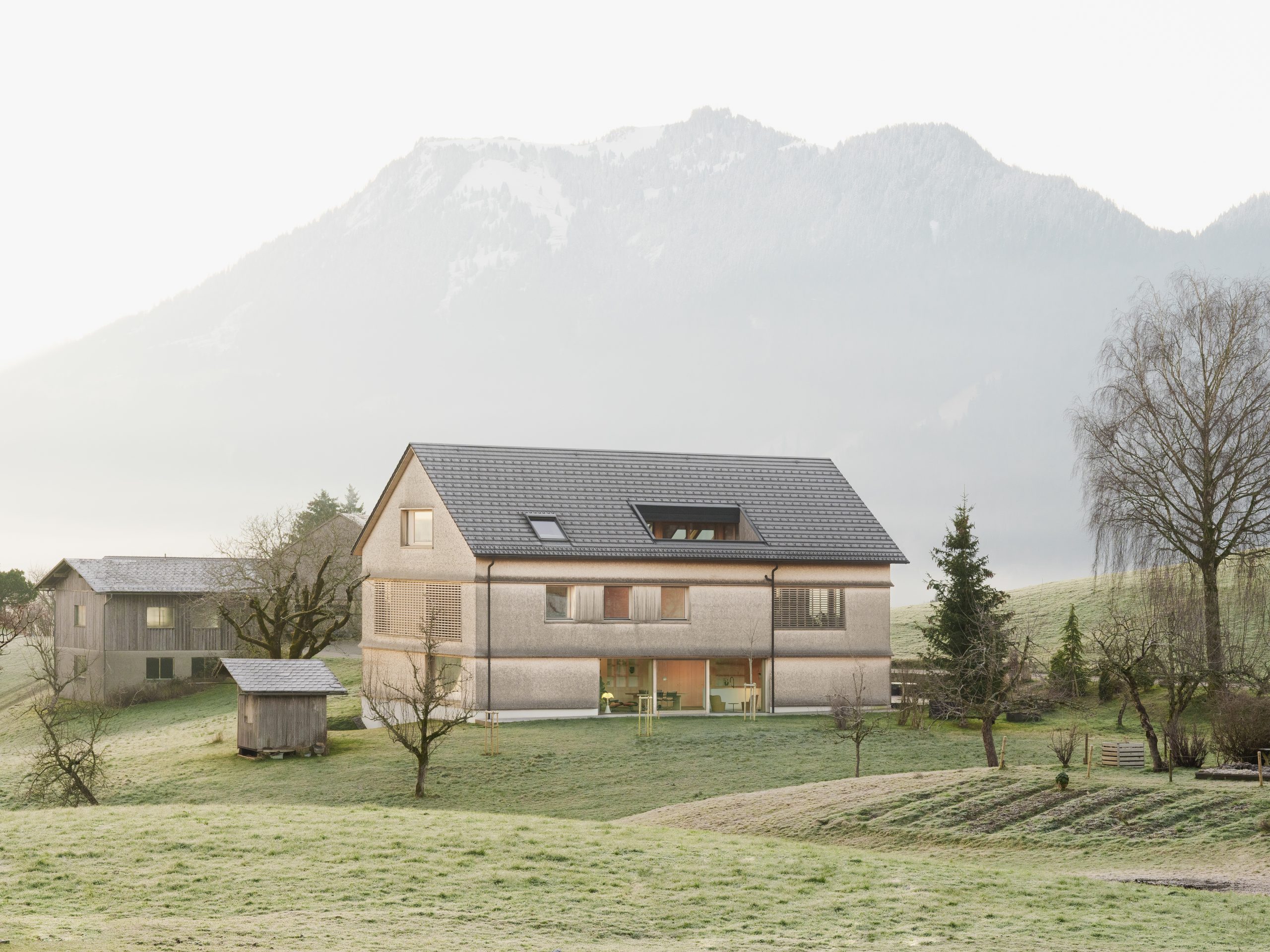
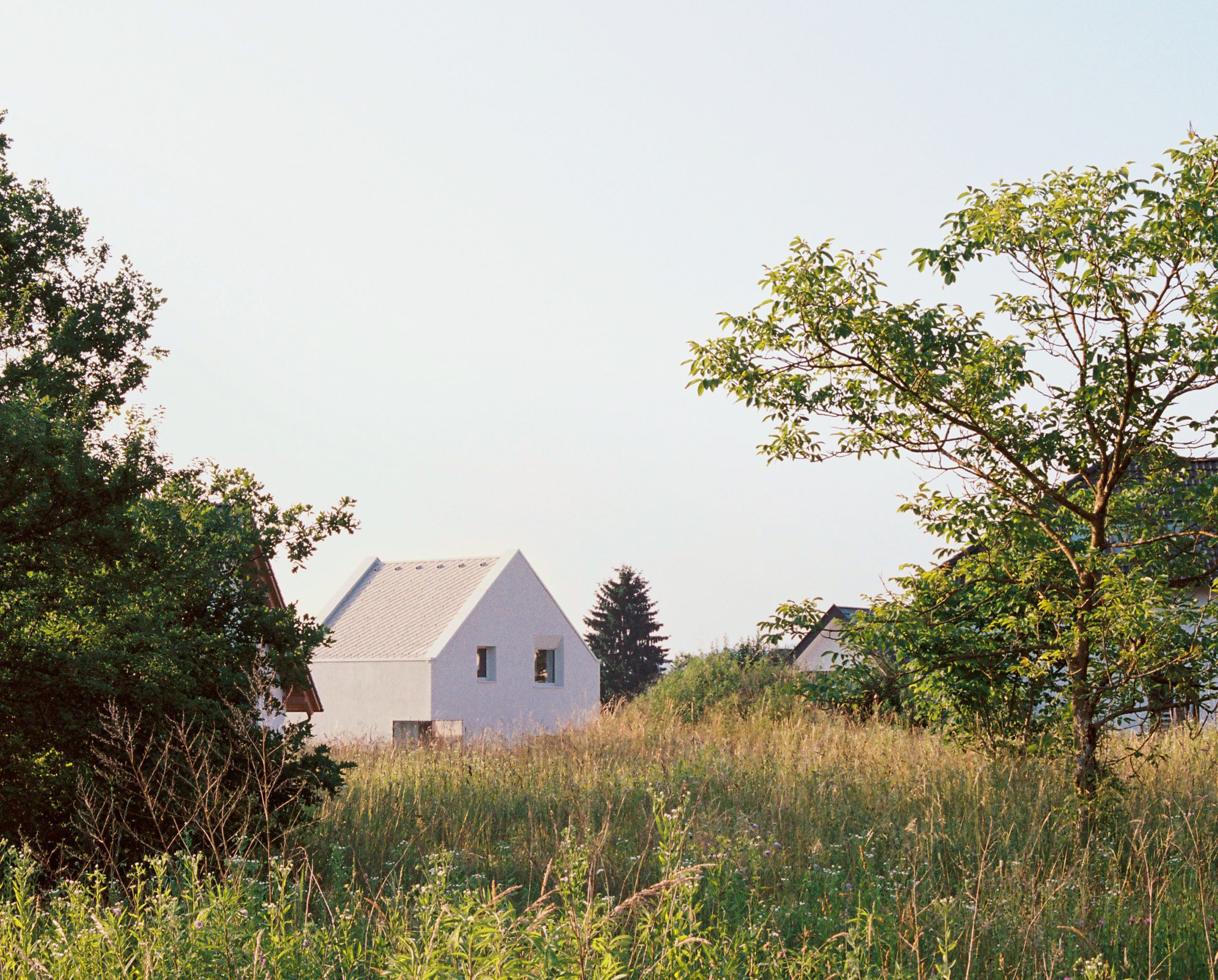
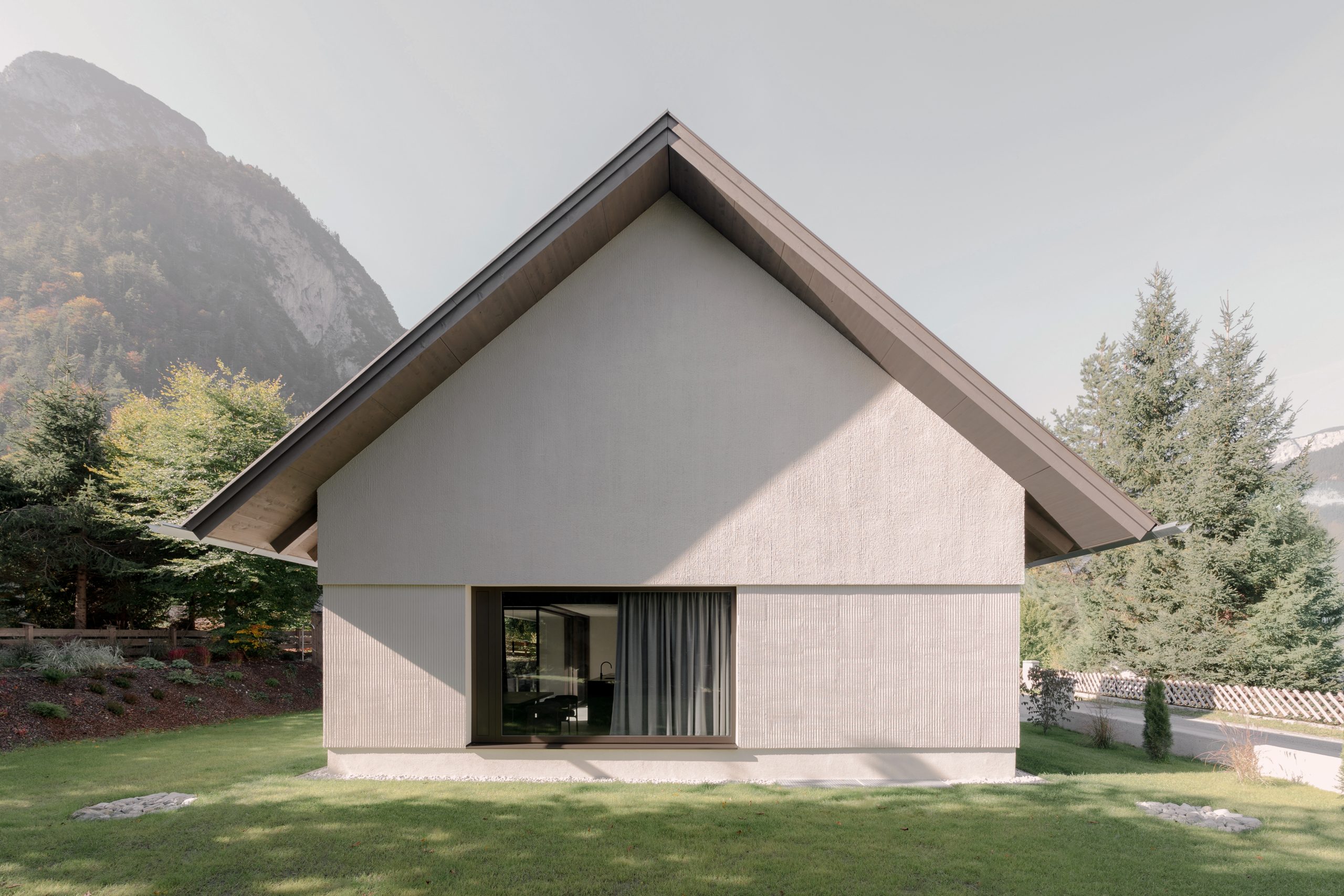
A former 1950s structure formed the starting point for Haus im Garten, rebuilt under strict regulations governing leisure residences in the Achental valley between the Karwendel and Brandenberg ranges. Defined by limits on volume and usable area, the project embraces constraint as a design tool. The steep roof emerges from spatial efficiency rather than expression, while the modest scale respects the surrounding village fabric. Instead of spectacle, the house proposes calm resistance to the visual noise increasingly present in Alpine regions.


Spatial Tension and Everyday Living
Life unfolds across two levels, with cooking, dining, and living spaces located at arrival level and sleeping chambers tucked beneath the expansive roof. A narrow footprint and precise organization generate spatial intensity, alternating compression and openness. Carefully carved southern openings admit filtered daylight and frame selective views of tree crowns and distant silhouettes. The garden becomes a quiet counterpart rather than an extension, connected through thresholds and layered transitions that choreograph movement between inside and outside.


Crafted Exterior and Garden Companion
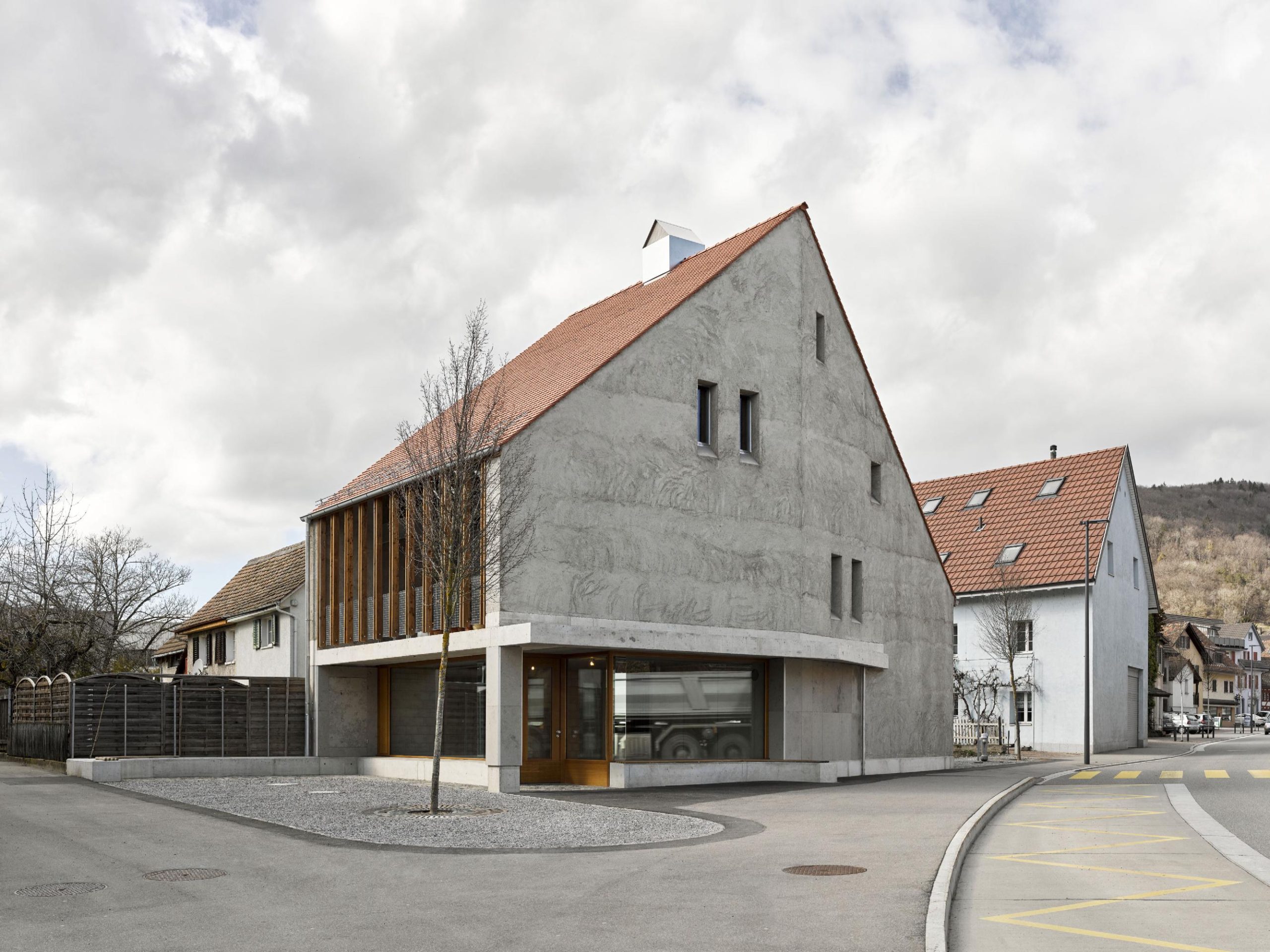
The exterior recalls the rough plaster facade of its predecessor, structured into base, wall, and gable beneath a generous pitched roof. Hand-drawn mineral plaster creates a textured surface shaped by craftsmanship, giving the building a tectonic presence. A small larch-wood garden house completes the ensemble, containing a Schwitzstube that opens toward the garden through a sliding timber screen. Weathering naturally over time, it remains a quiet companion — raw, restrained, and closely tied to seasonal change.

Light, Material, and Atmosphere
Darkly stained spruce surfaces shape the interior atmosphere, absorbing light and creating intimacy despite compact dimensions. Mineral plaster surfaces and framed oak windows capture light as focused moments rather than panoramas. Inspired by Jun’ichirō Tanizaki’s reflections on shadow, the design values nuance over brightness: shifting gradations of light and darkness define each room. Heavy curtains and dense materiality reinforce privacy, allowing the spaces to feel grounded, calm, and deeply tactile.
Project Gallery