Location: Bad Mitterndorf, Steiermark, Austrian Alps
Year: 2021
Architecture: Studio Johannes Lukas
Photography: David Schreyer
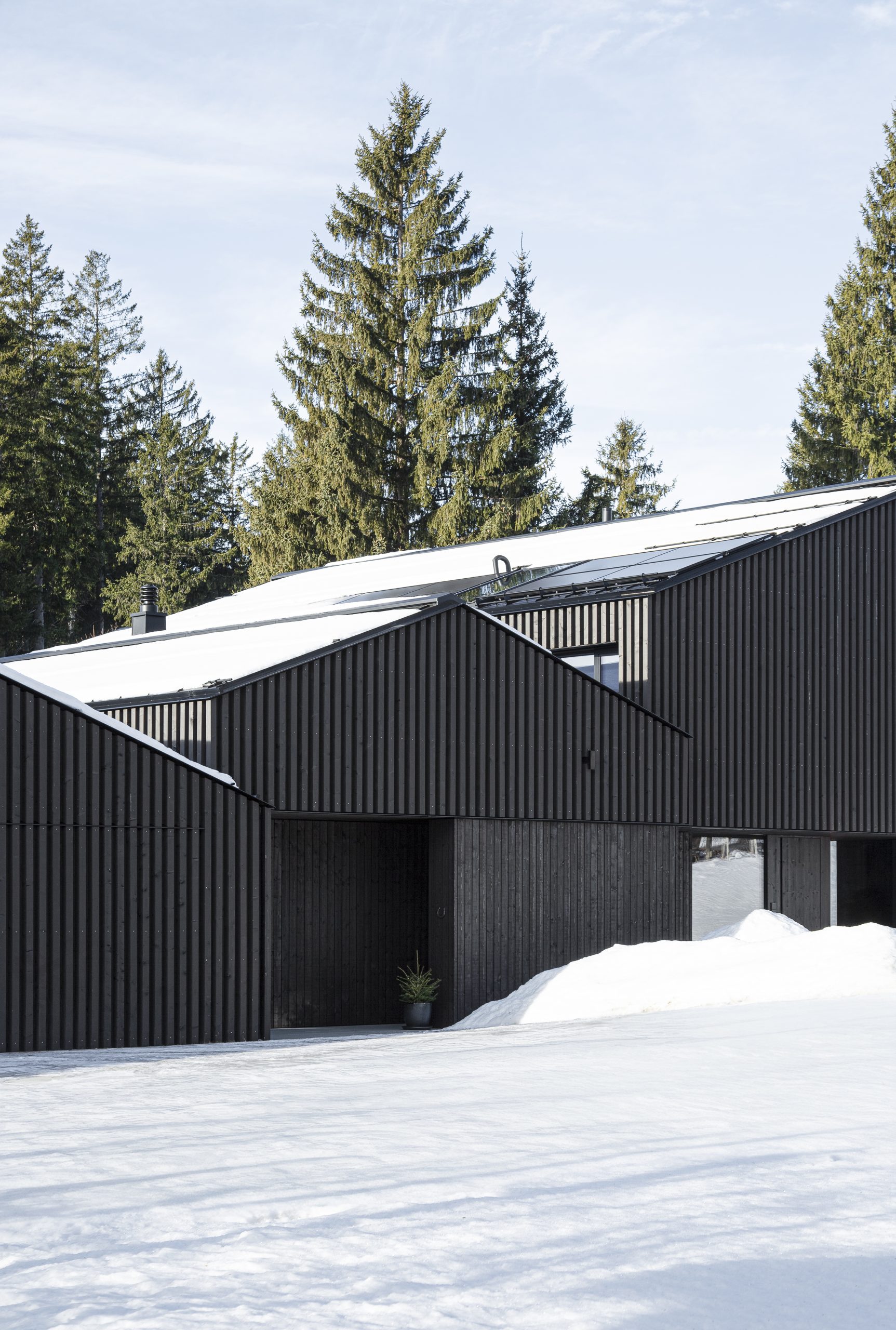
Text by the architect (translated). Tracks in the snow lead around the house, as the interest in new architecture seems to be significant in Bad Mitterndorf. Some elements feel familiar, yet the house draws attention in the small Austrian community.
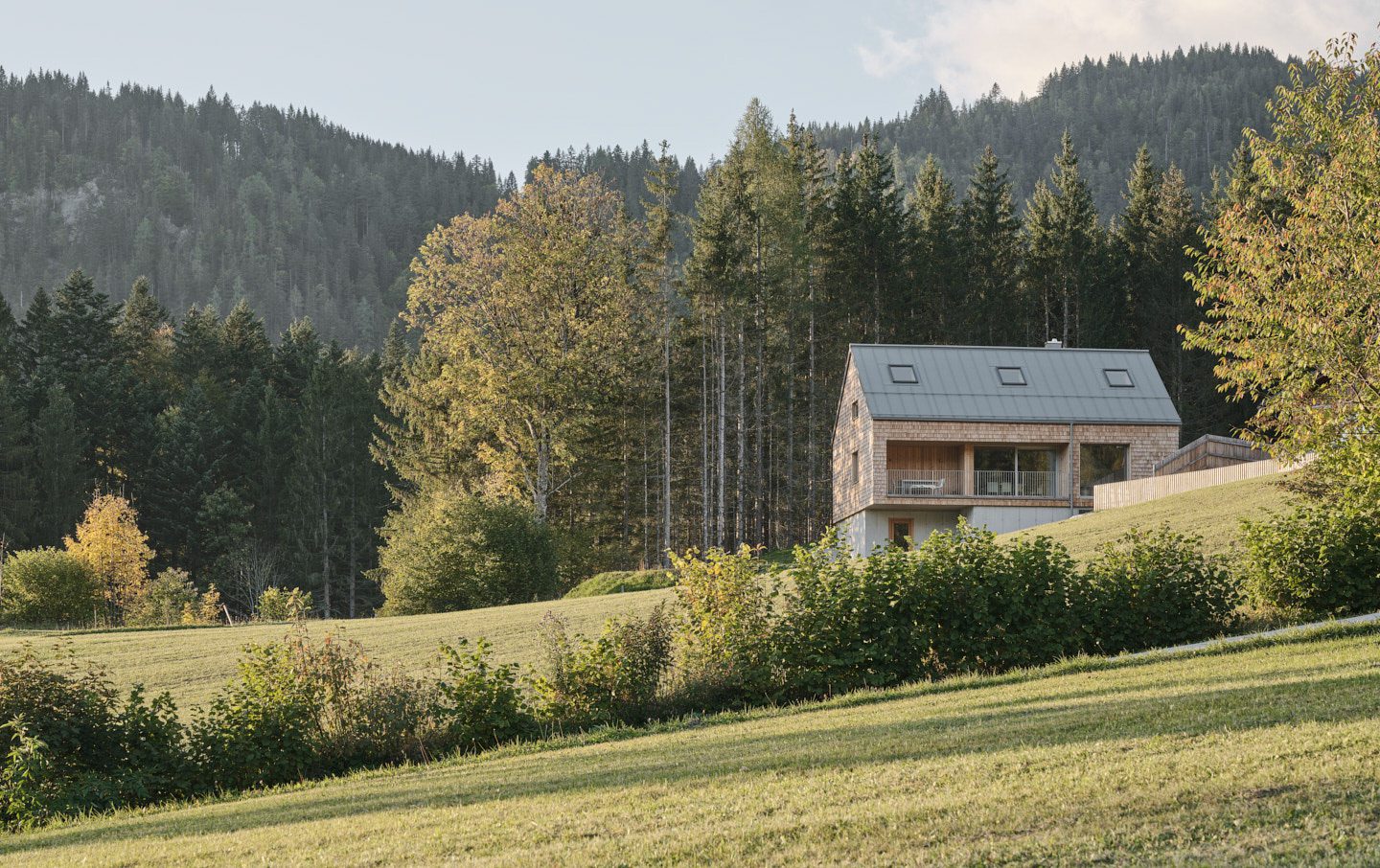
Viewed from the driveway, the archetypal main structure, combined with a traditional shingle façade, appears understated at first glance. Only the modest roof overhang and the concrete staircase encircling the base diverge from the typical local image. On the sloping side, a separate entrance provides access to the basement. In addition to housing technical equipment, this level contains a guest room and two additional spaces. These offer flexibility for future expansions and could, if needed, be connected to the upper floor through the pantry. Such features reflect Studio JL’s commitment to creating buildings that adapt to the evolving needs of future occupants and develop in line with changing life circumstances.

Both for structural and aesthetic reasons, the solid wood construction is elevated from the ground by an exposed concrete base. The cantilevered corner on the southwest side emphasizes this effect. Care was taken to ensure that all terraces are shielded from the region’s severe weather conditions. The entire building emerges from the slope with direct views of the mountain massif opposite. This rotation also enhances the interior’s lighting conditions, creating an interplay of light and shadow through the evenly distributed skylights. Inside, wood dominates as the defining material. Surfaces clad in white fir, combined with a clay stove, create a cozy atmosphere. The seamless plant-based cast floor ensures that the underfloor heating distributes warmth evenly throughout the room.


The kitchen is the centerpiece of the holiday home. Designed without overhead cabinets, it allows an unobstructed view through the space. From here, all functions are easily accessible via short paths. The square kitchen island offers ample workspace from all sides and invites shared cooking experiences. The entire living area is conceived as a continuous spatial composition, connecting all functions and levels. Spatial elements and varying ceiling heights define the different areas. In the living and dining areas, large glass panes direct the gaze toward the impressive mountain landscape. A sliding door leads to the sheltered patio, which, thanks to the cantilevered design, appears to hover above the landscape. Overall, the window area has been deliberately kept minimal to evoke a cabin-like character.


The upper floor is accessed via an ash wood staircase, its edges illuminated at night by an indirect lighting rail. This level features a gallery with space for a mattress loft, as well as a separate bedroom and accompanying bathroom. The design thrives on its spatial complexity and its direct connection to the surroundings. It makes the most of the unique view of Grimming, the highest free-standing mountain in Europe. For Studio JL, it was crucial to understand and reinterpret the local building culture in their design. At the same time, they sought to highlight the beauty of wood as a construction material, integrating it into the design process from the very start.
The quality of Z91 was also significantly influenced by the “Letmaier” carpentry team. Craftsmen who approach a project with passion, embrace new solutions, and develop them in collaboration with architects enable an architecture that is both enjoyable and striking.
Project Gallery