Location: St.Martin, Trentino-Südtirol, Italian Alps
Year: 2014
Architecture: Andreas Flora
Photography: Benjamin Pfitscher
A bold gesture within village scale
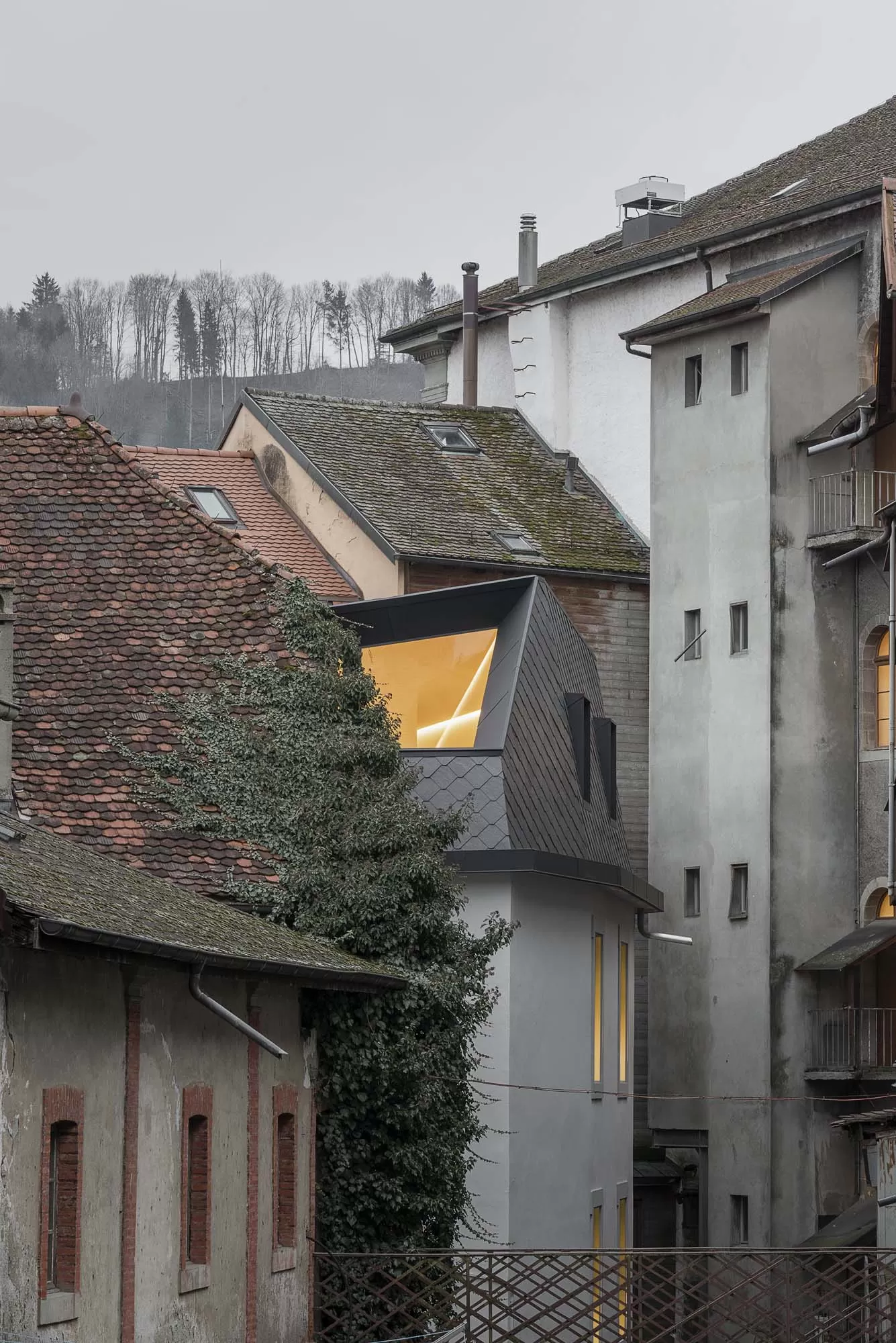
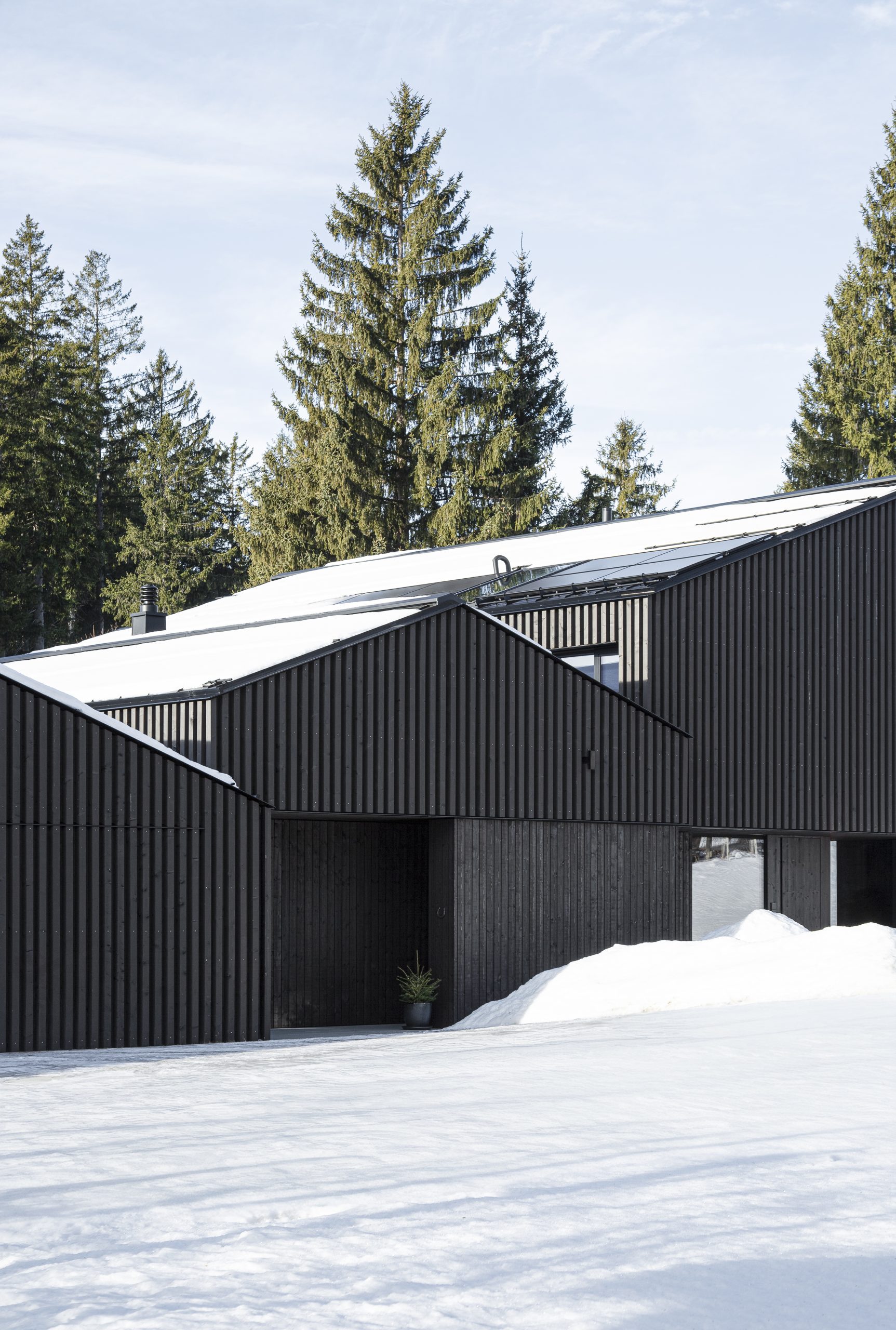
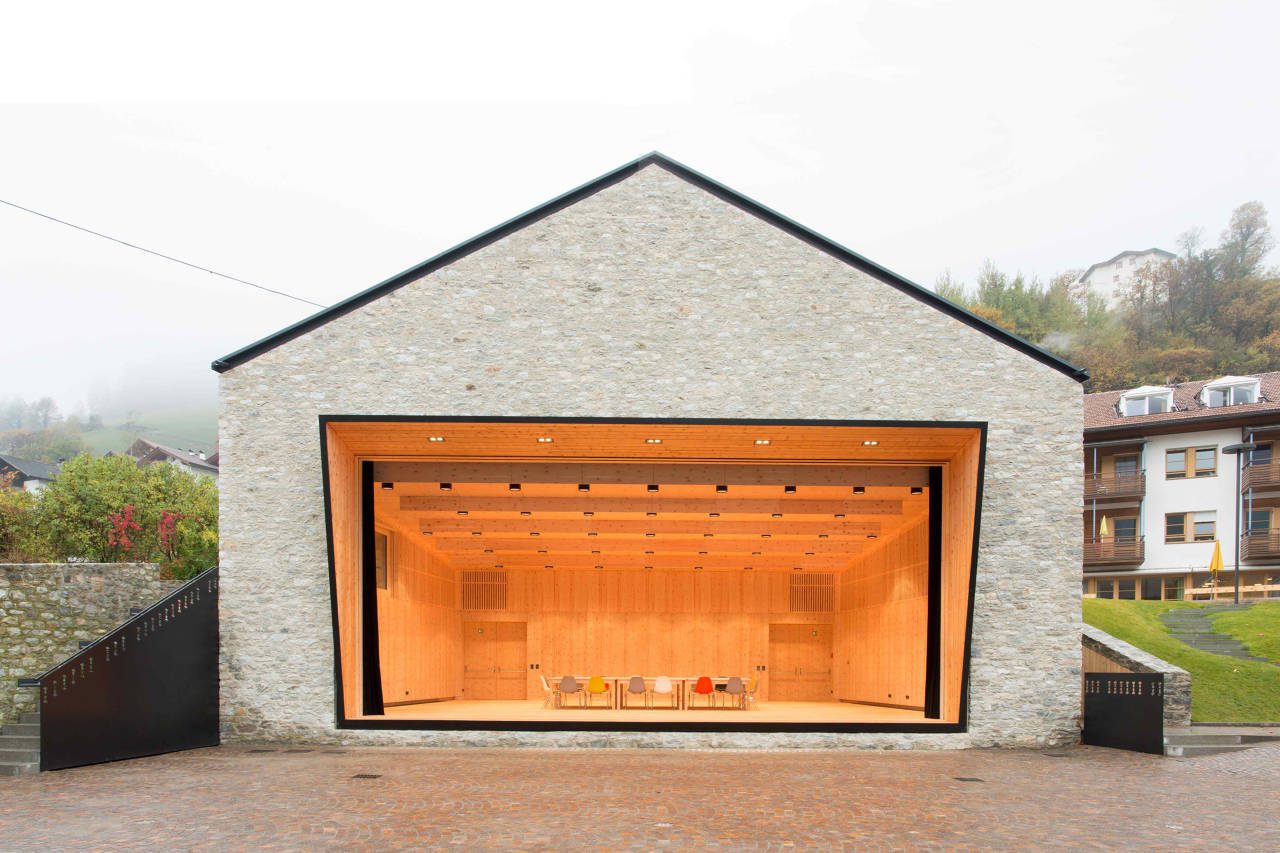
In the Alpine village of St. Martin, home to 3,000 residents, a new community center challenges conventional adaptation. While its form respects local scale and gabled typologies, the architecture purposefully introduces elements of disruption—through color accents, large openings, and sculptural incisions. This deliberate tension invites a renewed dialogue between tradition and the contemporary, encouraging new modes of interaction within the historic village core.


Embedded volume, expressive surface
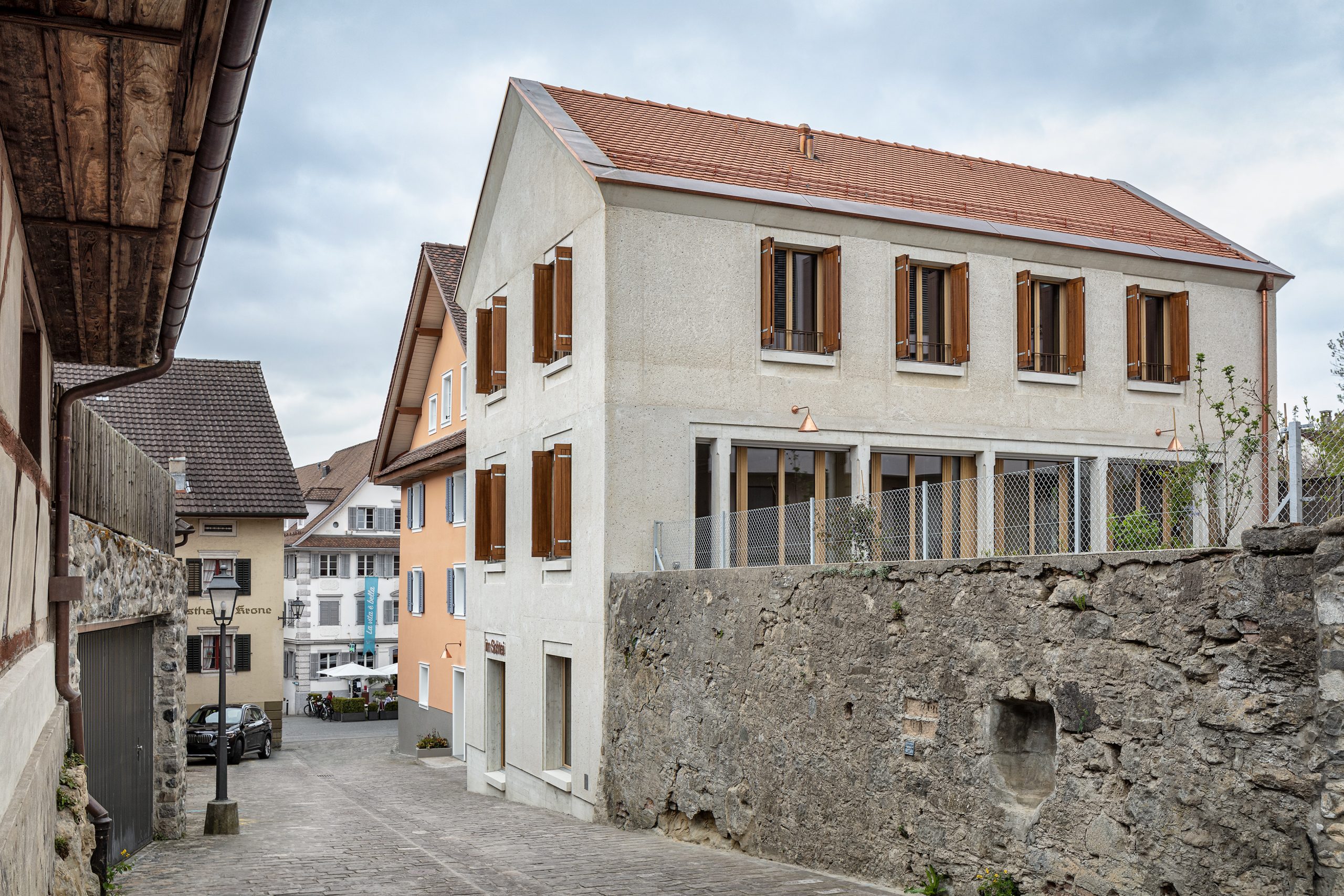
Architect Andreas Flora responds to the project’s demanding spatial requirements by embedding most of the building underground. Taking advantage of the site’s topography, rehearsal spaces, ancillary rooms, and an underground parking garage are hidden below the surface, naturally lit via skylights. Above ground, a singular stone volume stands confidently on the village square. It echoes familiar roof forms yet distinguishes itself with sharp geometry and a carved facade, projecting openness and civic presence.

Architecture as cultural interface
The heart of the building is a stage area with a large-format gate that fully opens toward the square, enabling public events regardless of weather. This functional gesture transforms the building into an active participant in village life, framing cultural activities in a way that feels both modern and rooted. By extending into public space, the architecture signals transparency, engagement, and the value of shared experiences—avoiding Alpine clichés in favor of a more inclusive expression.


Material honesty and social process
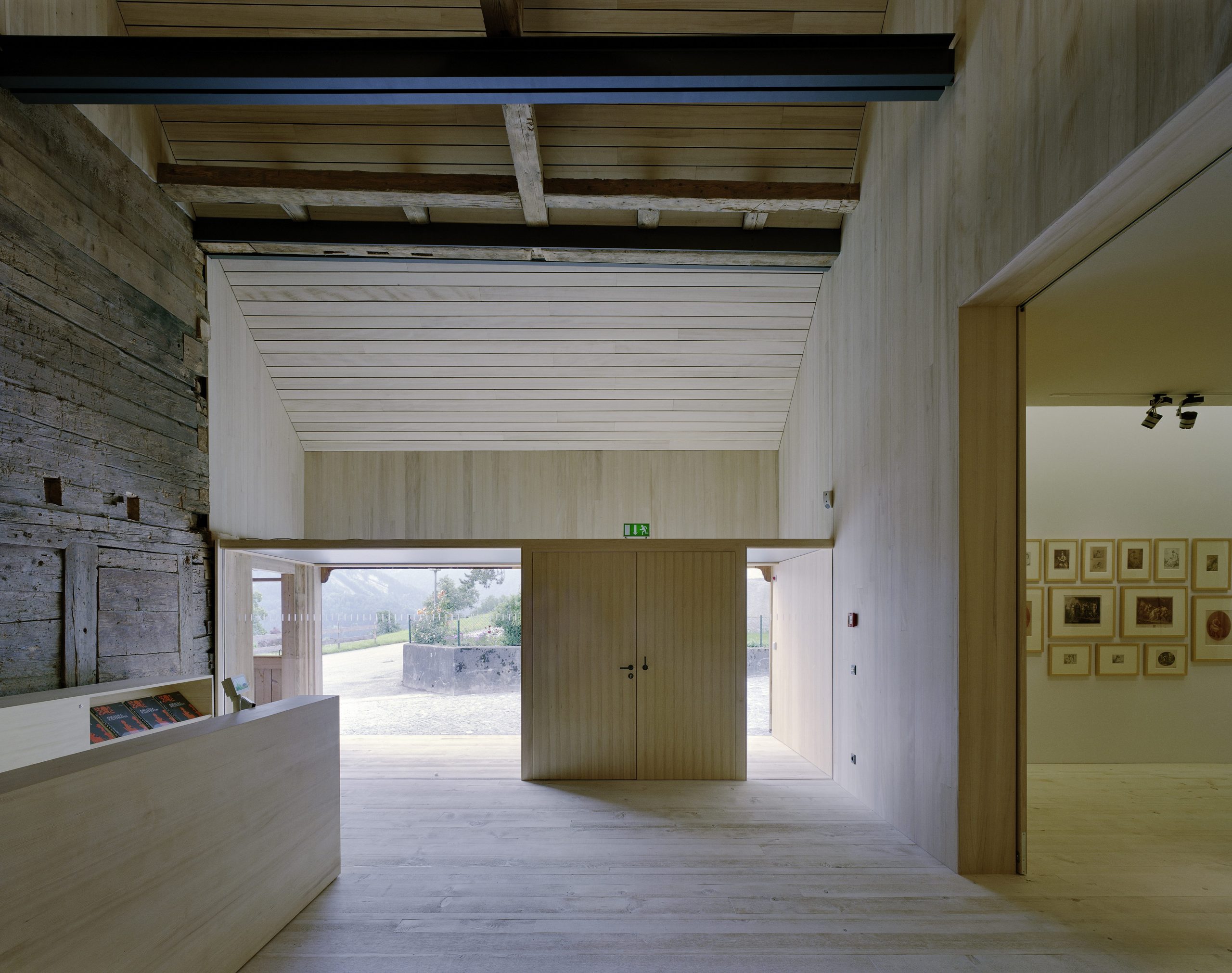
The use of regional recycled stone and untreated Swiss pine connects the building to its setting, while brightly colored, minimalist furnishings inject a subtle layer of contemporary contrast. The design emerged from a multi-year participatory process with local residents, ensuring both spatial and social relevance. This collaborative foundation earned the project the South Tyrolean Architecture Prize in 2013—evidence that forward-thinking architecture can be successfully integrated into even the most traditional Alpine contexts.
Project Gallery