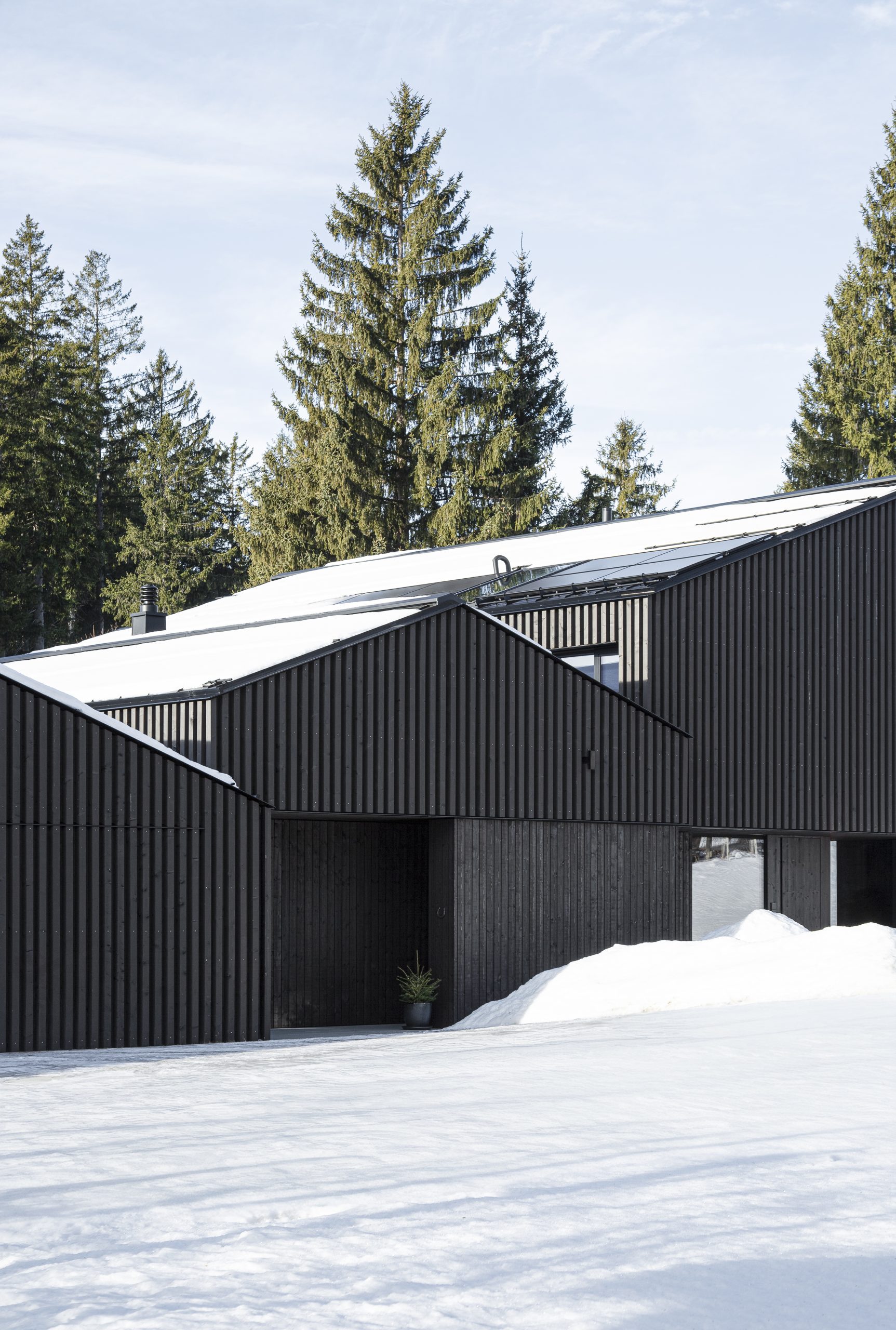
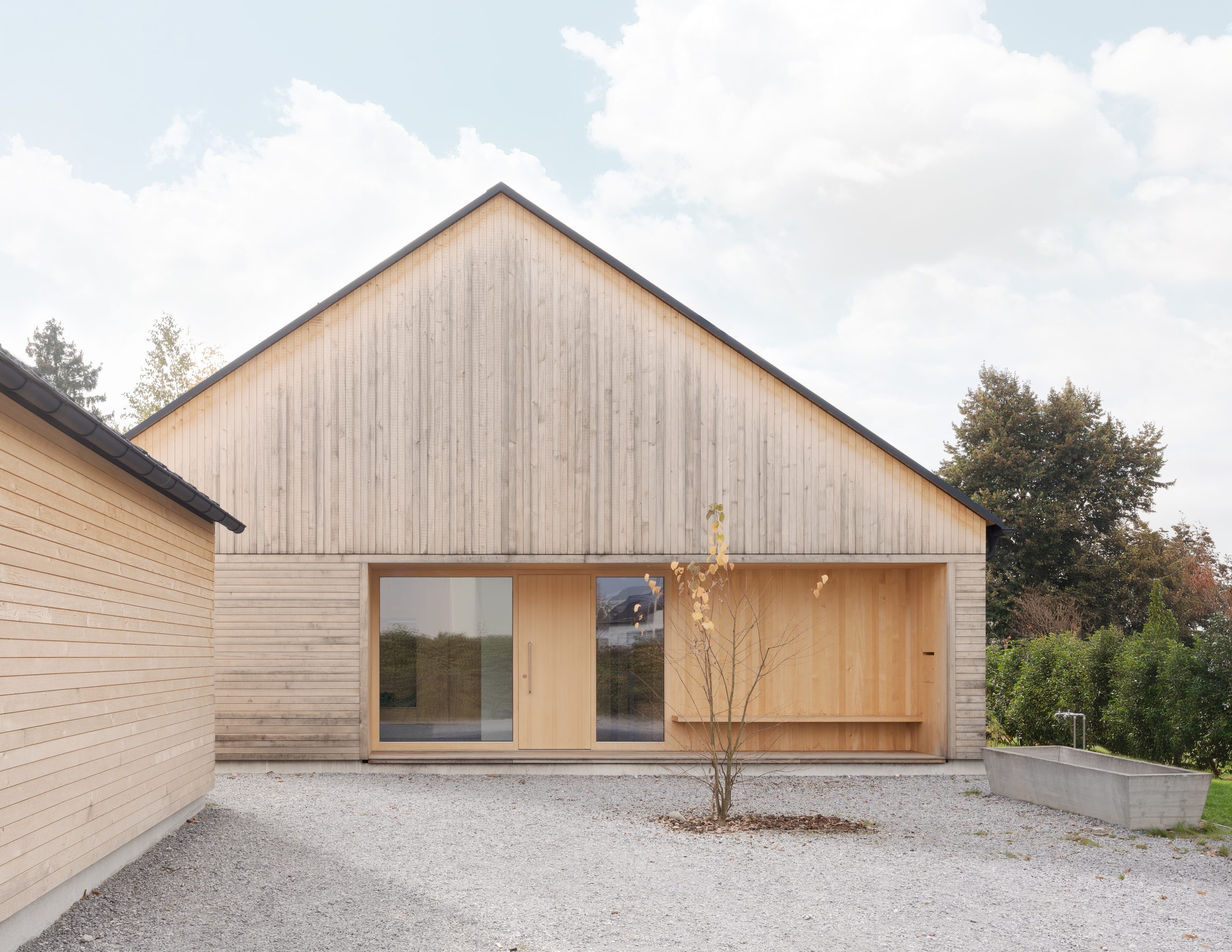
The EKT Werkhof by kit shows what conviction costs. EKT, an energy and data provider, chose timber over masonry for its new depot and offices, knowing it would cost more. The result is a three-storey spruce frame, stacked as a strut truss, spanning open floors without a single column. The municipality met that choice halfway, permitting extra height so the larger wood sections would not steal ceiling space.
Bending the Rules for Wood
That conviction had a second effect. Sulgen’s building code sets a standard height limit, but timber construction needs deeper structural sections than concrete to span the same distance. Rather than force the architects to lower ceiling heights to fit within the usual envelope, the municipality allowed the building to exceed it. It is a small adjustment on paper, and a rare one in practice. Sustainable construction is often discussed as a matter of materials and detailing. Less often discussed is the administrative goodwill it can require, and how easily that goodwill fails to arrive.


A Frame Without Columns
The structural outcome of that decision is a three-storey spruce frame, stacked as a “Sprengwerk,” a strut-braced truss more commonly seen spanning a single volume, here repeated floor by floor. The system allows column-free spans across the office and vehicle halls alike, so the building can be reconfigured over time without structural obstruction. Seen from inside the open-plan offices, the timber is left exposed, giving the workspace a visible logic: the frame that holds up the building is also the space people occupy.
Where Colleagues Meet
The social spaces reflect the same restraint. A rooftop garden doubles as a break room with an outdoor kitchen, and a south-facing grill area sits nearby, both intended less as amenities than as ordinary places for informal exchange during the workday. Office partitions combine structural glass with spruce, while stud walls are filled with hemp-fibre reinforced clay panels. Parapets are finished in clay plaster rather than paint or metal. None of this is spectacular on its own, but together it gives the interior a consistency that is easy to overlook and hard to fake. It is a modest ambition, and possibly the most telling one: a building shaped less by statement than by the accumulated cost of doing things properly, floor by floor.