Location: Ritten, South Tyrol, Italy
Year: 2024
Architecture: Andreas Gruber
Photography: Gustav Willeit
Rural setting with cultural continuity
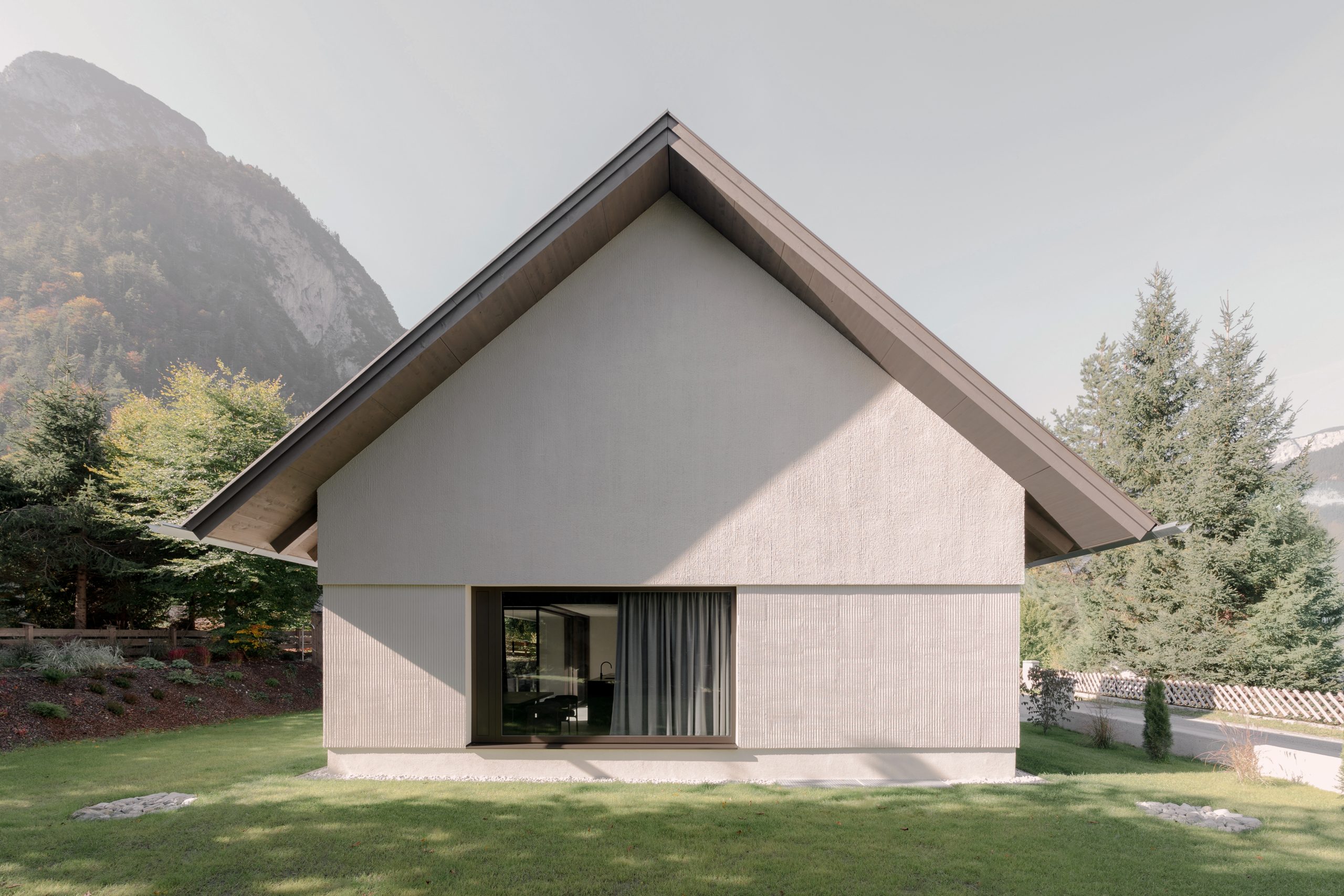
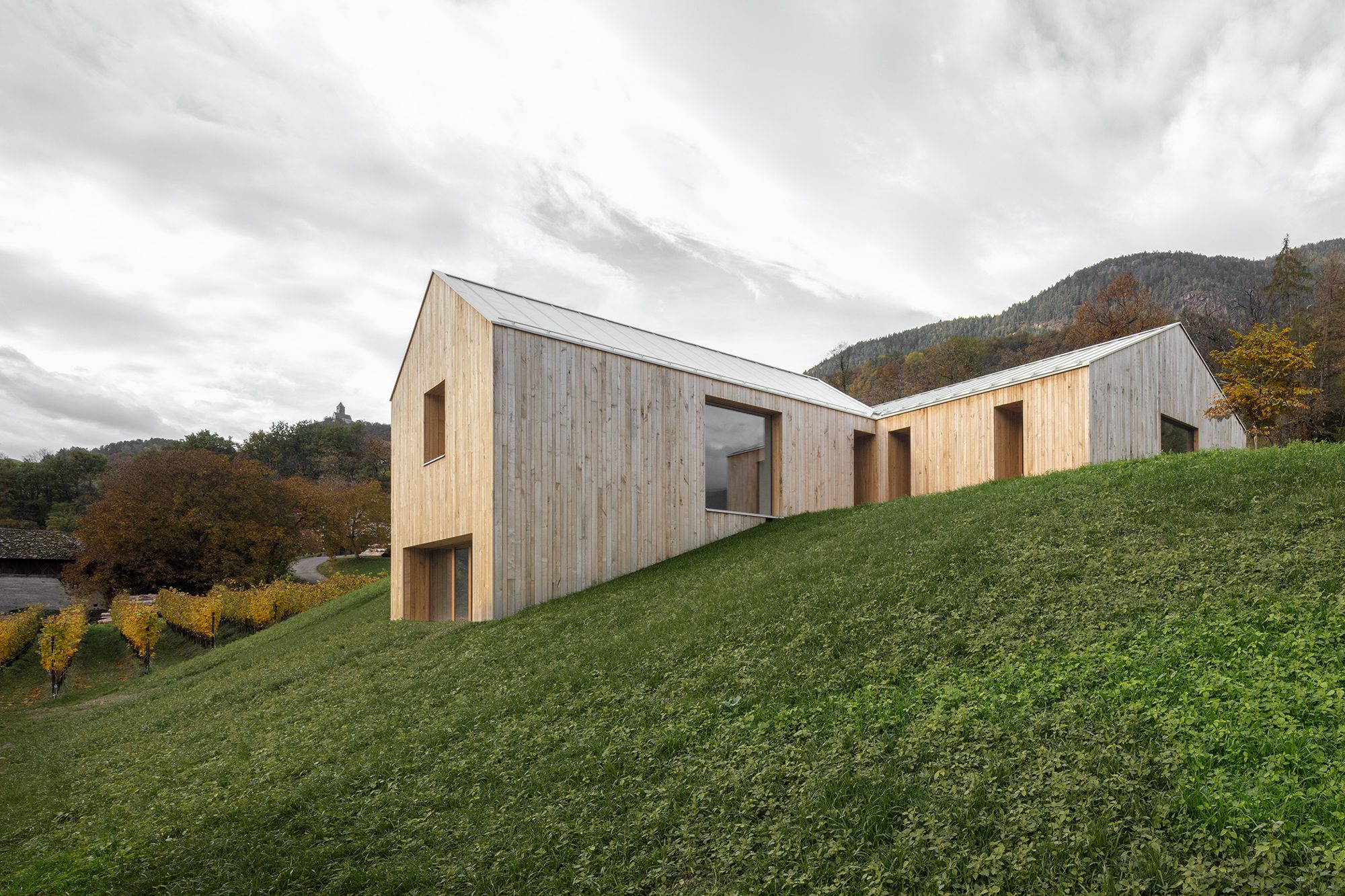
Habitat L stands on an exposed slope of the Eisack Valley near Lengstein, in the South Tyrolean municipality of Ritten. Surrounded by chestnut groves, vineyards, and pastures, the project reinterprets the typology of a rural homestead. It combines agricultural functionality with the spatial needs of a young family and echoes local settlement patterns in both form and materiality. The sloped terrain was carefully preserved, and the house, a compact volume with a gabled roof, blends in through its robust yet subtle articulation.

Material identity and regional logic
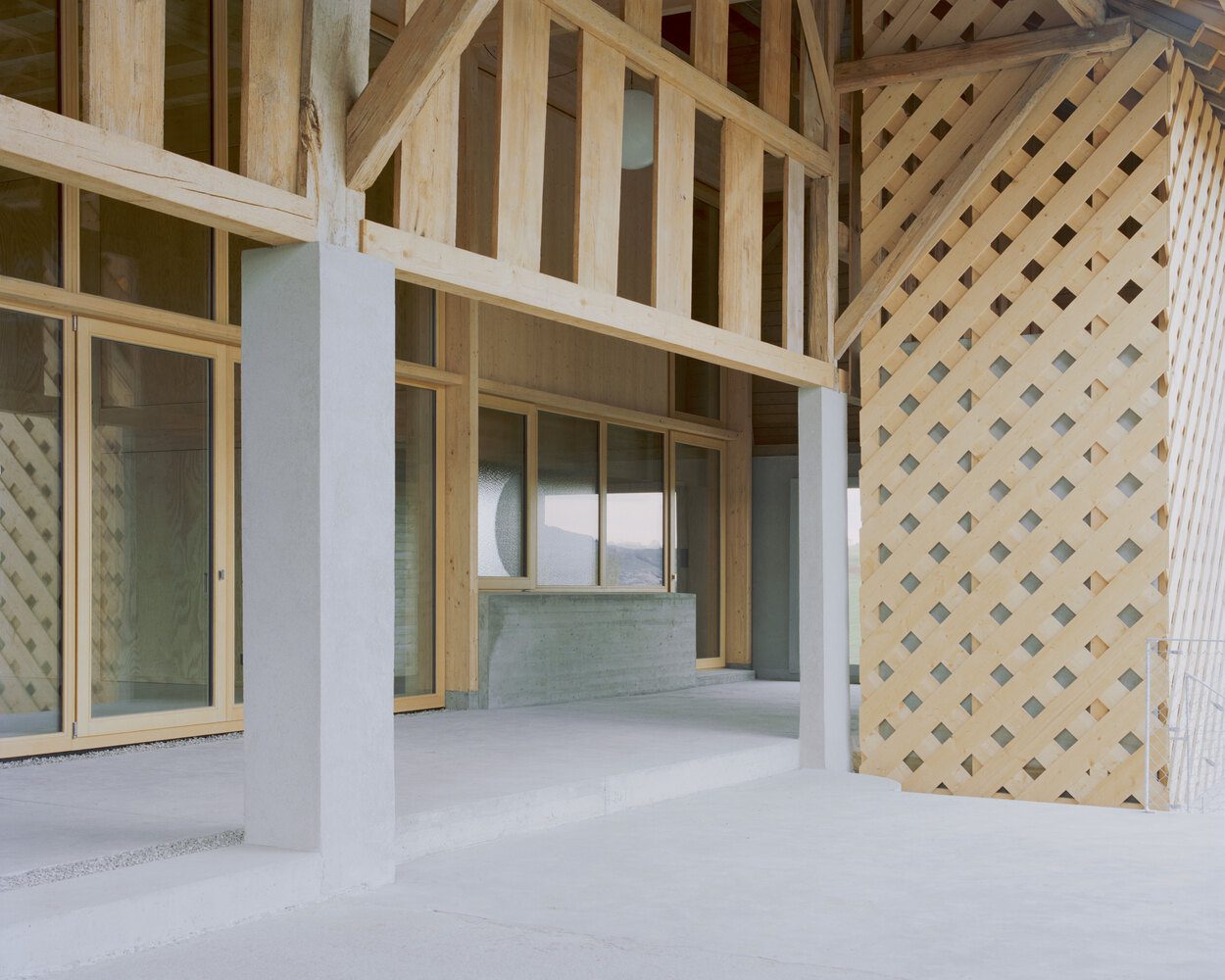
The design draws from the Alpine vernacular without mimicking it. Thick lime-plastered walls, cast-in-place concrete, and chestnut wood from the farm’s own forest define the architectural language. Deep facade cuts structure the elevations and give the building a distinctive rhythm, while built-in features—like a recessed window niche—turn solid walls into furniture. The material palette was chosen for durability and environmental resonance, anchoring the house in its agrarian surroundings.


Living above, working below
Habitat L is accessed from the mountain side and distributes its functions across two levels. The upper floor hosts living and sleeping quarters, while the basement contains agricultural rooms with a separate entrance from the valley side. This functional layering reflects the dual nature of the building—both homestead and farmhouse. Over time, the family intends to refine and market their farm products, and the project provides the spatial infrastructure to support this ambition.

Sustainable, rooted, forward-looking
With its use of exclusively natural materials and an energy-efficient concept based on geothermal probes, a heat pump, and photovoltaics on a nearby barn, Habitat L embodies a commitment to sustainability. The locally sourced chestnut wood extends from facade to interior, reinforcing the house’s tactile authenticity. Both architecture and construction reflect a respectful, future-oriented attitude toward rural living.
Project Gallery