Location: Hirschau, Vorarlberg, Austrian Alps
Year: 2022
Architecture: Simon Moosbrugger
Photography: Simon Oberhofer
A discreet addition to a traditional structure
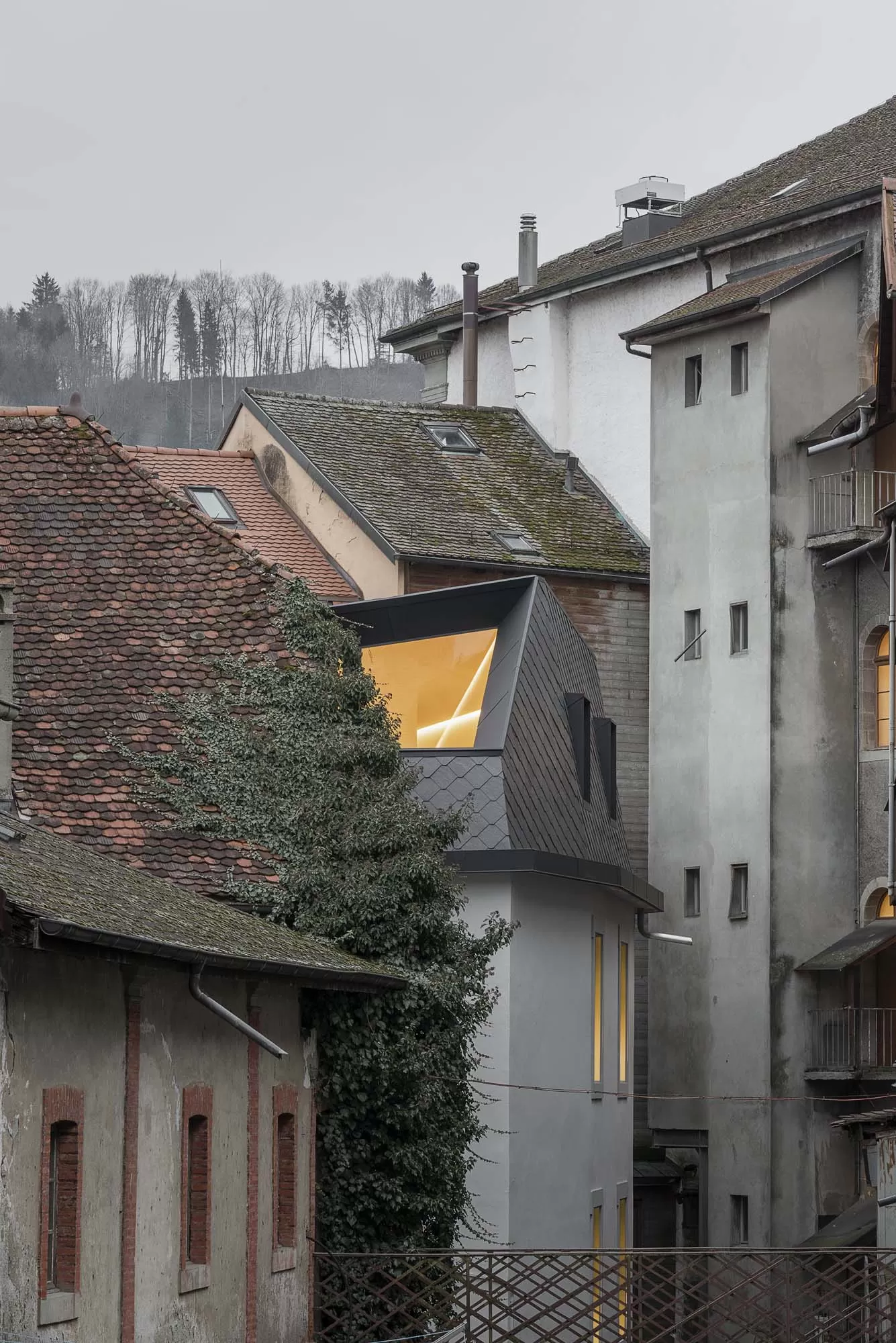
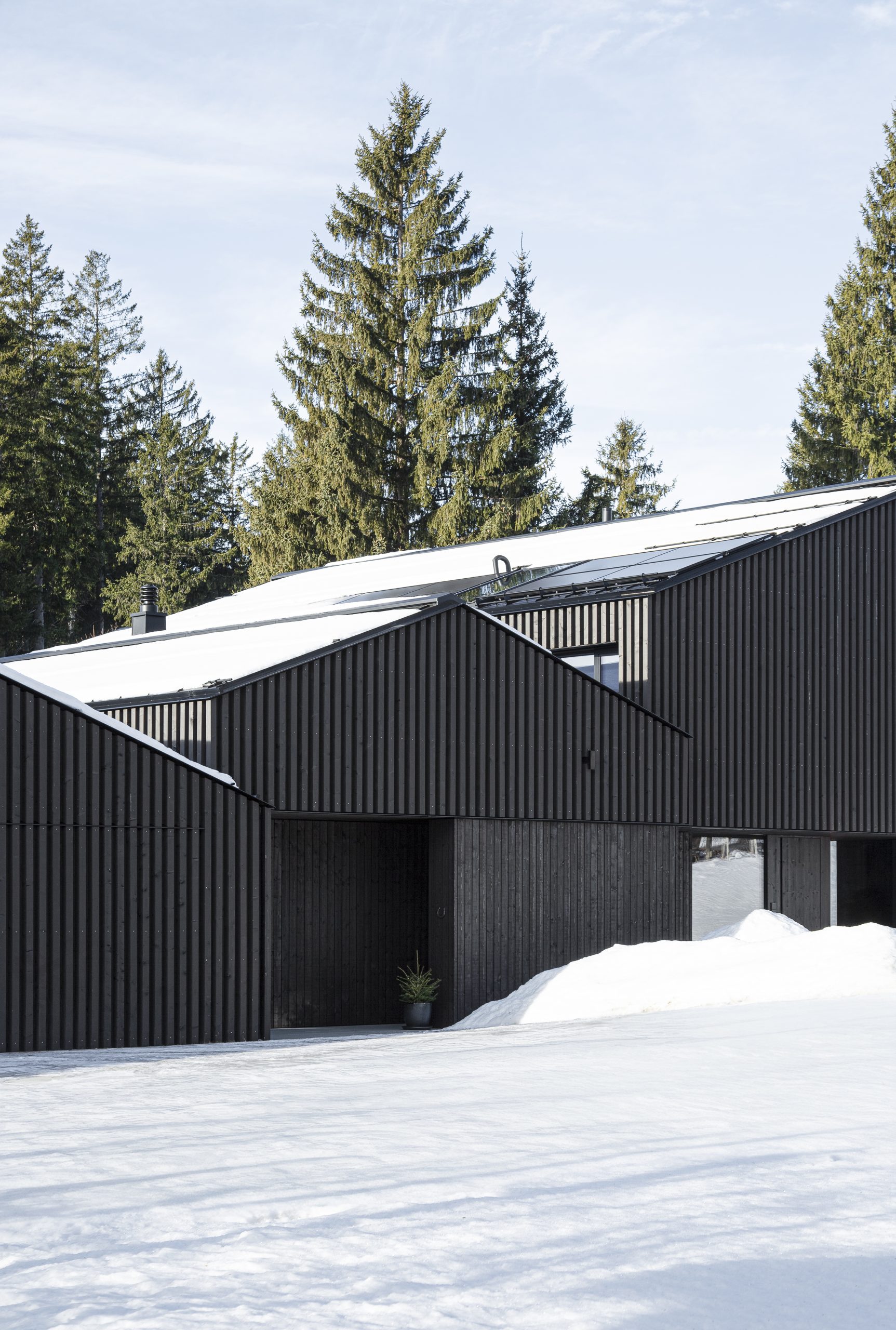
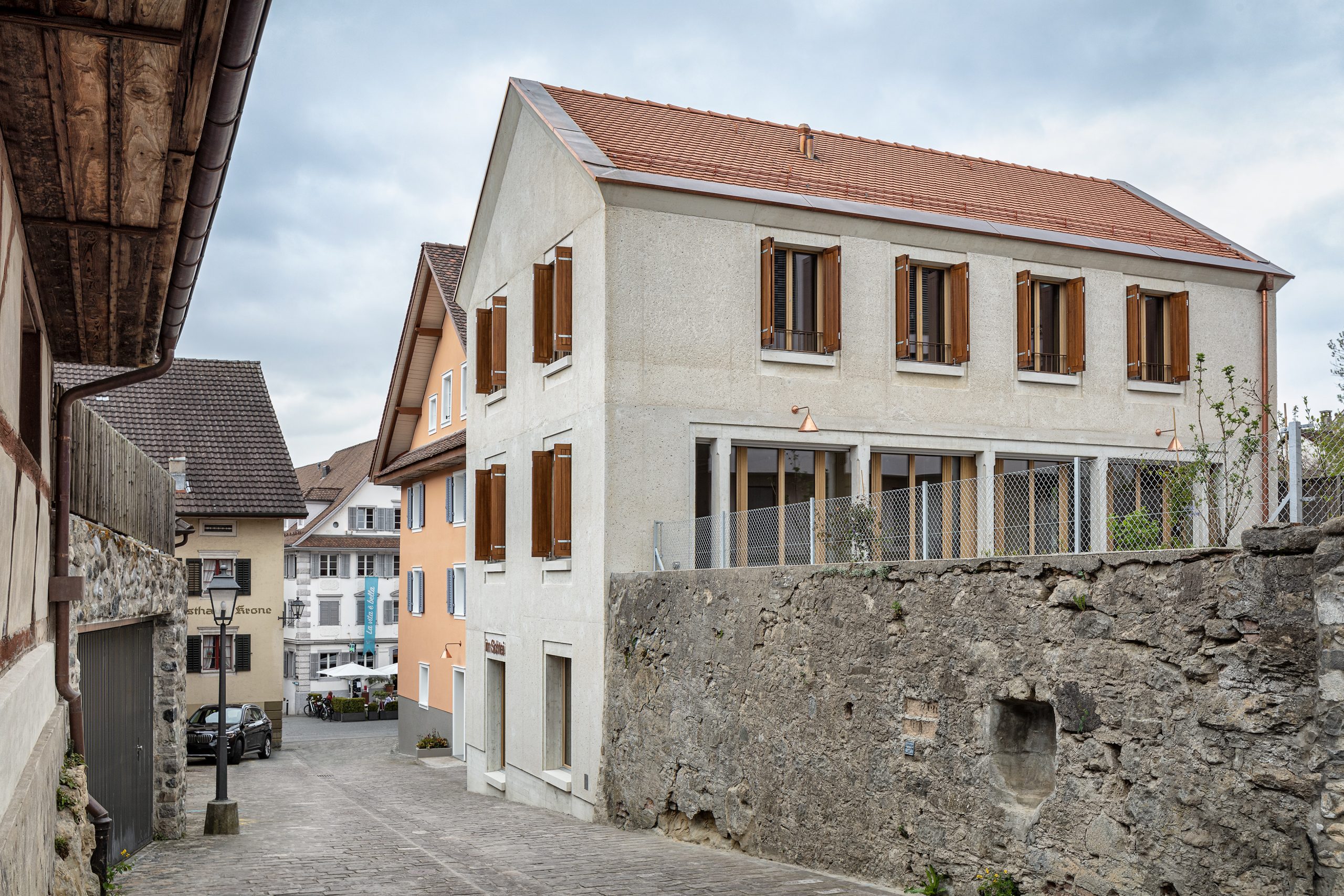
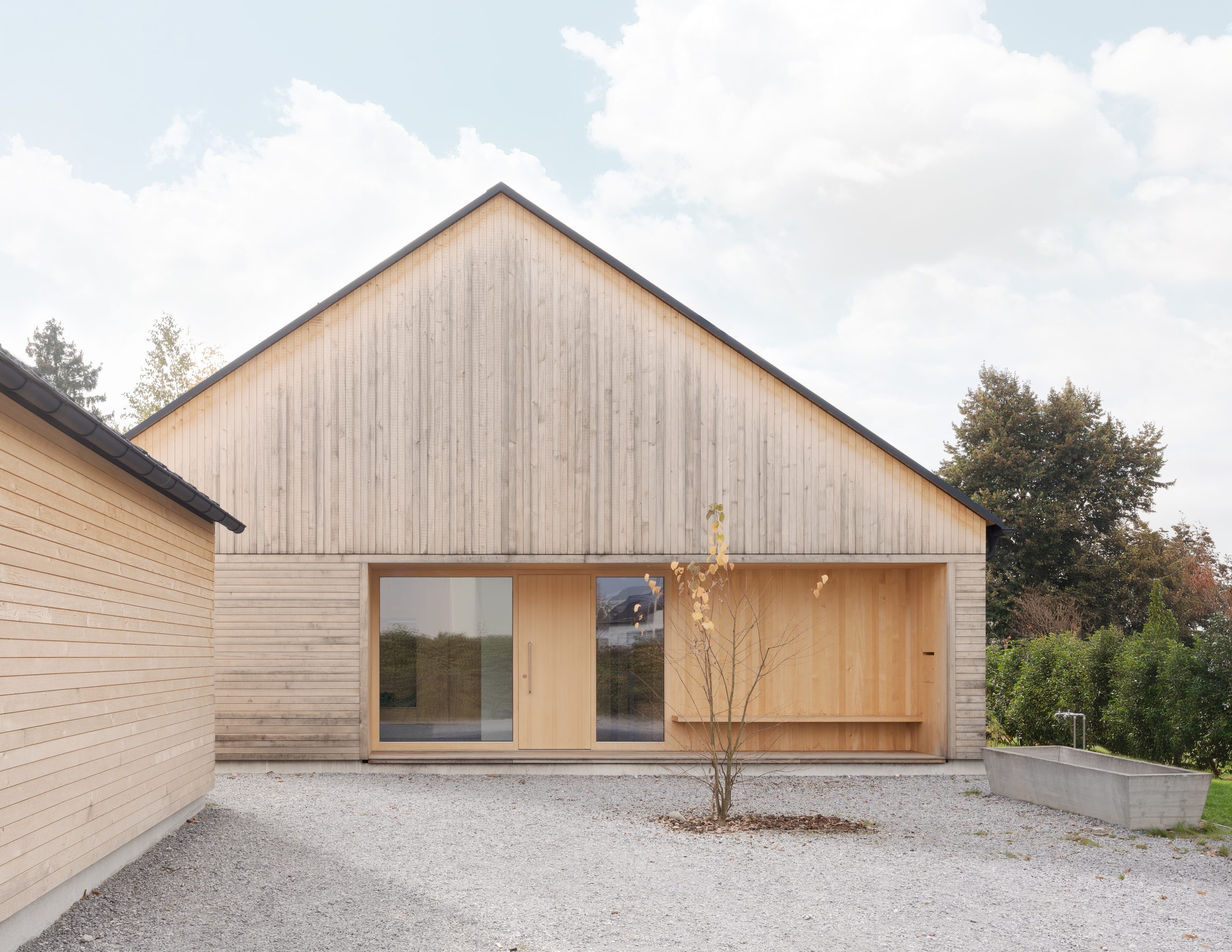
In the village of Hirschau, a carefully restored Bregenzerwald house now conceals a contemporary rear extension known as the Hinterhaus. The intervention by Simon Moosbrugger introduces a new spatial volume with a deliberately understated external appearance. This modest shell contrasts with the historic facade, only revealing its unexpected interior geometry upon entry through the original low front door.


Transitioning between eras
Once inside, visitors pass through an entrance zone with a cloakroom that bridges the old and new. While the front building maintains its original charm with narrow staircases and low ceilings, the rear introduces spaces designed for modern use—such as a seminar room, office, and guest facilities. These are accessed via the historic stairwell, preserving the spatial narrative of the existing structure.


Contrasts in height and materiality
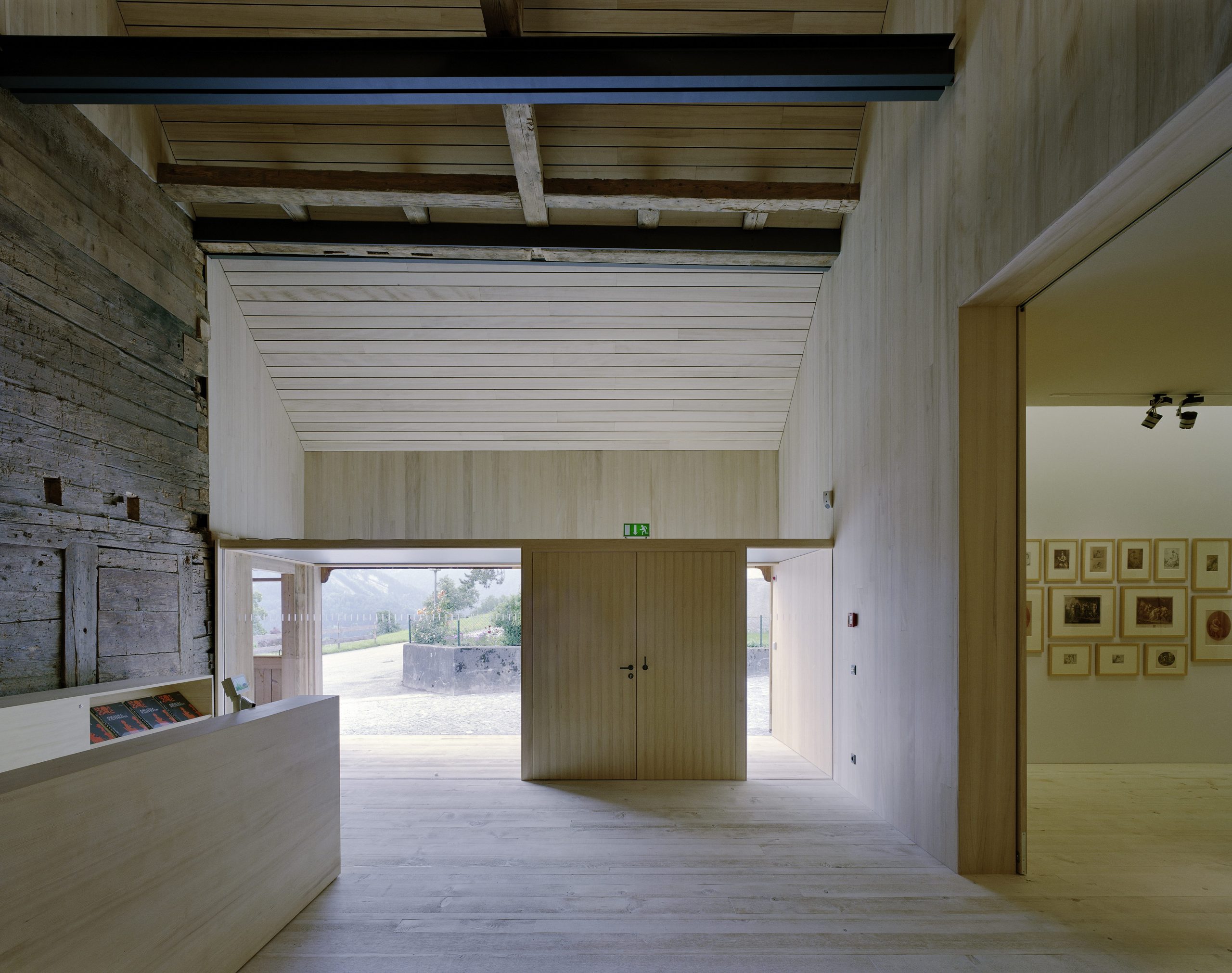
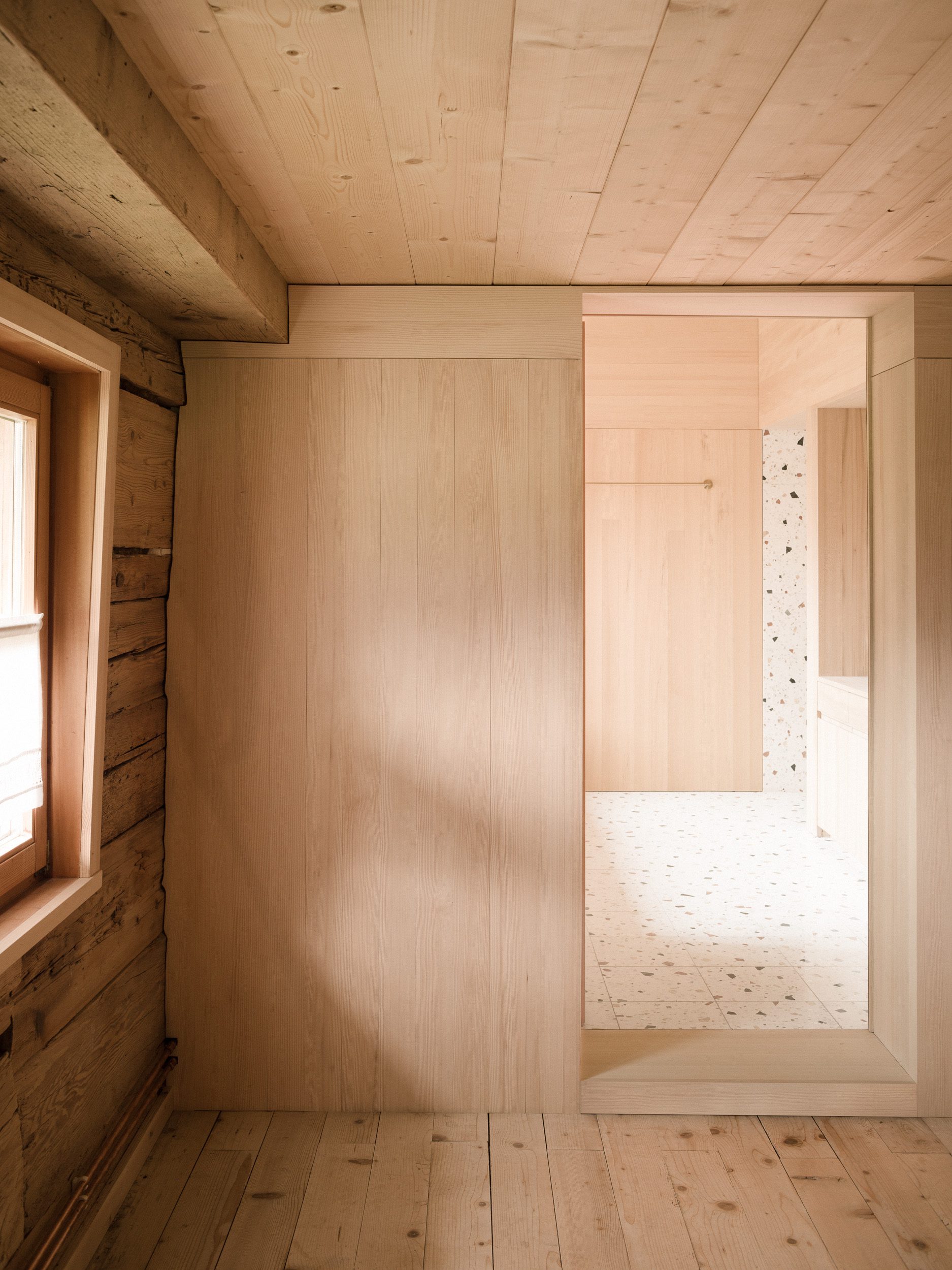
The new volumes depart from the restrained front rooms, offering ceiling heights up to 460 cm and a variety of distinctive geometries. Local materials like silver fir and terrazzo define these spaces, lending them a refined yet grounded character. A vaulted bathroom finished with pink lime plaster exemplifies the sensitivity to form, light, and tactility, while fixed wooden slats filter views and sunlight.


A dialogue between old and new
Rather than mimicry, the restoration embraces contrast to create cohesion. Coarse meets fine, introversion meets openness, and minimalism draws from ancestral pragmatism. Awarded runner-up at the Vorarlberg Timber Construction Prize, the project stands as a responsible and poetic reimagining of rural Alpine architecture.
Project Gallery