A House Built to Mediate
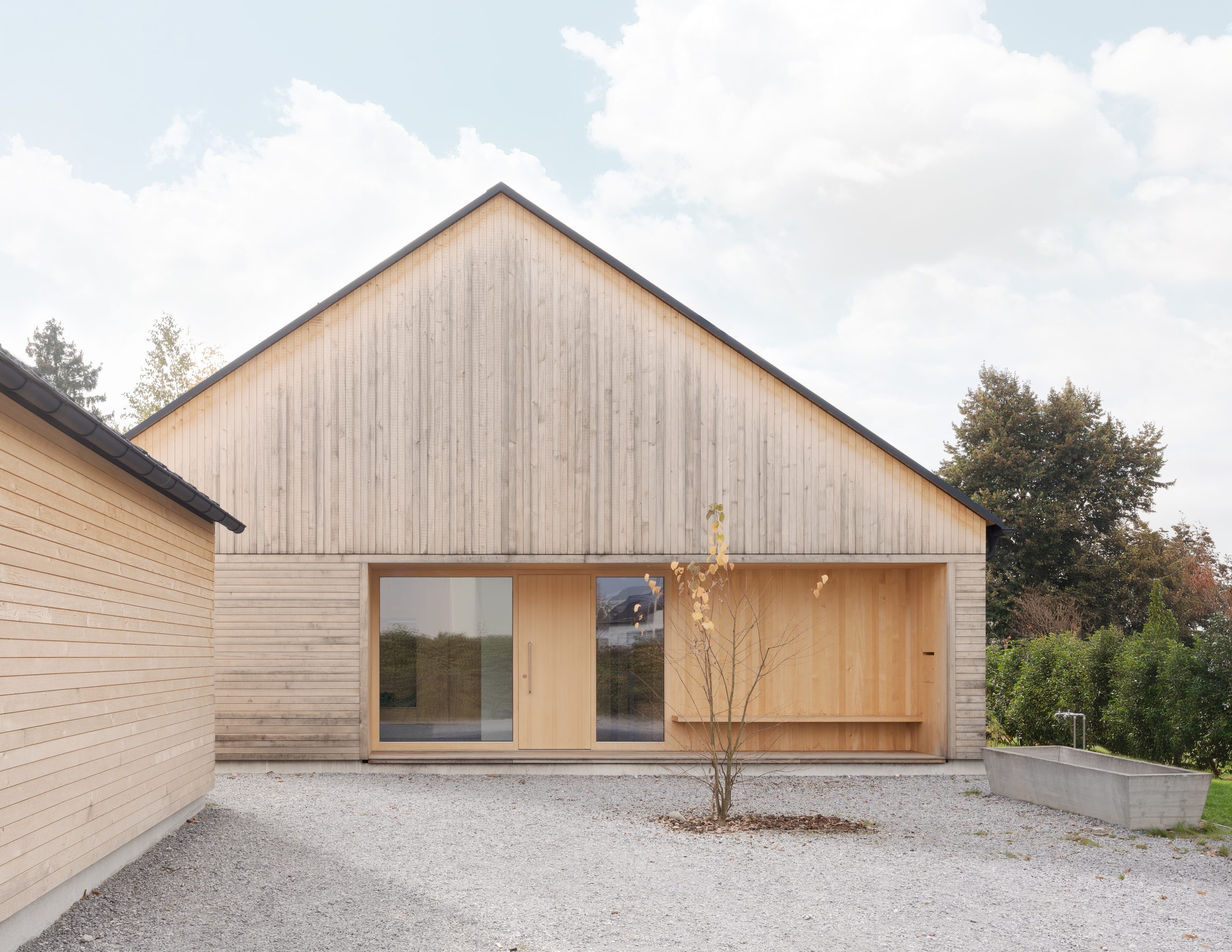
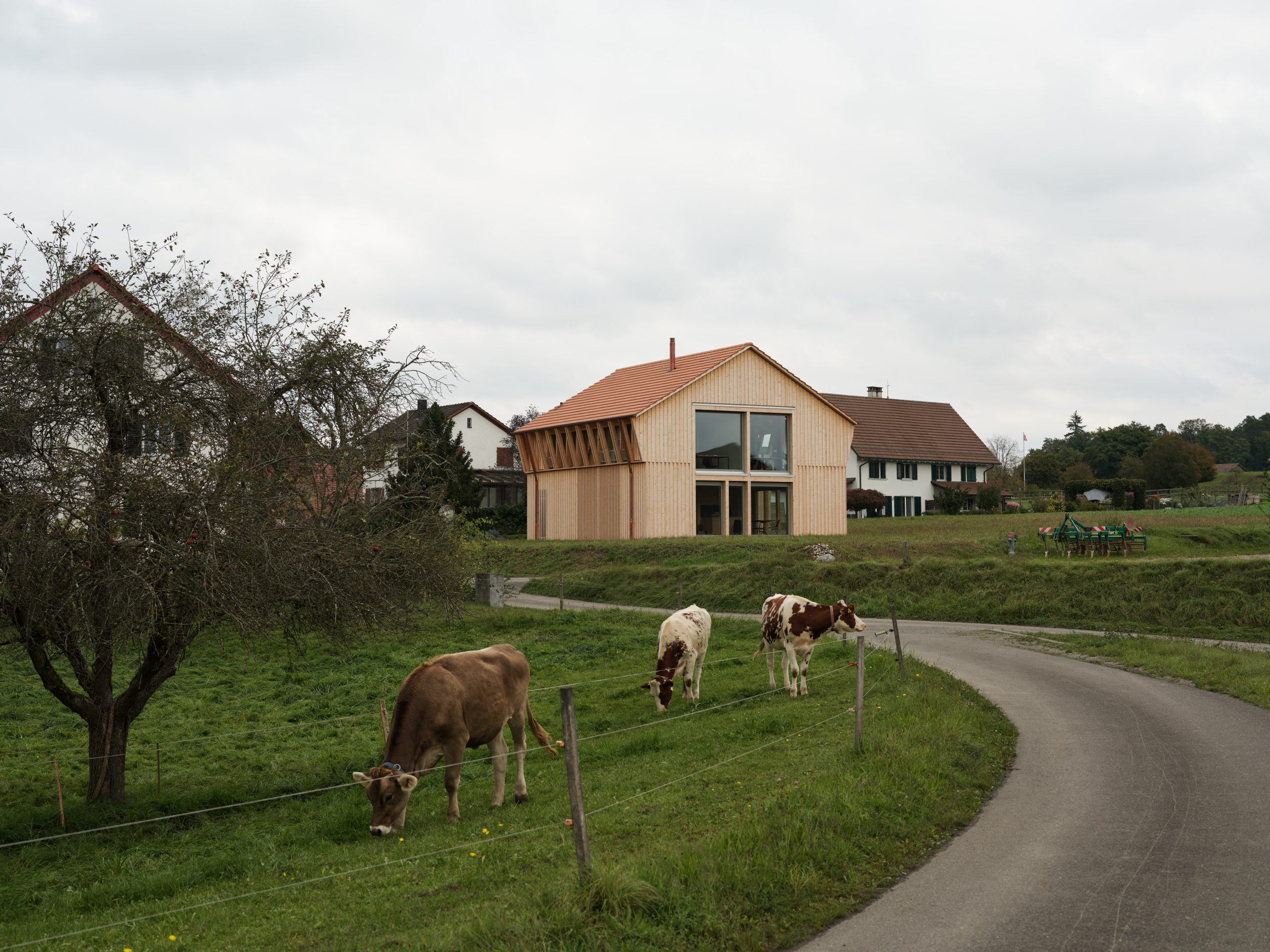
The House Keiler sits in two parts. A low, single-storey entrance block stands beside the main house, and together they form a small ensemble of their own. The entrance block solves a real site problem: it creates distance from the neighboring building, which the architects had to build close to, and it meets fire safety requirements within that tight boundary. The taller main volume, freed from the constraints of the site’s diagonal northern edge, reads as a clear, self-contained form — a quiet nod to the Einhof, the traditional single-volume farmhouse of the region.

The reference matters less as nostalgia and more as discipline. Where the entrance structure connects straight through from south to north, the main house opens toward the south and west and closes almost completely to the north. Inside, the sequence is simple: enter at the lower level, climb five steps into an open kitchen and living space, and continue upward to a private floor with three bedrooms and a bathroom.
What “Reduction” Leaves Out
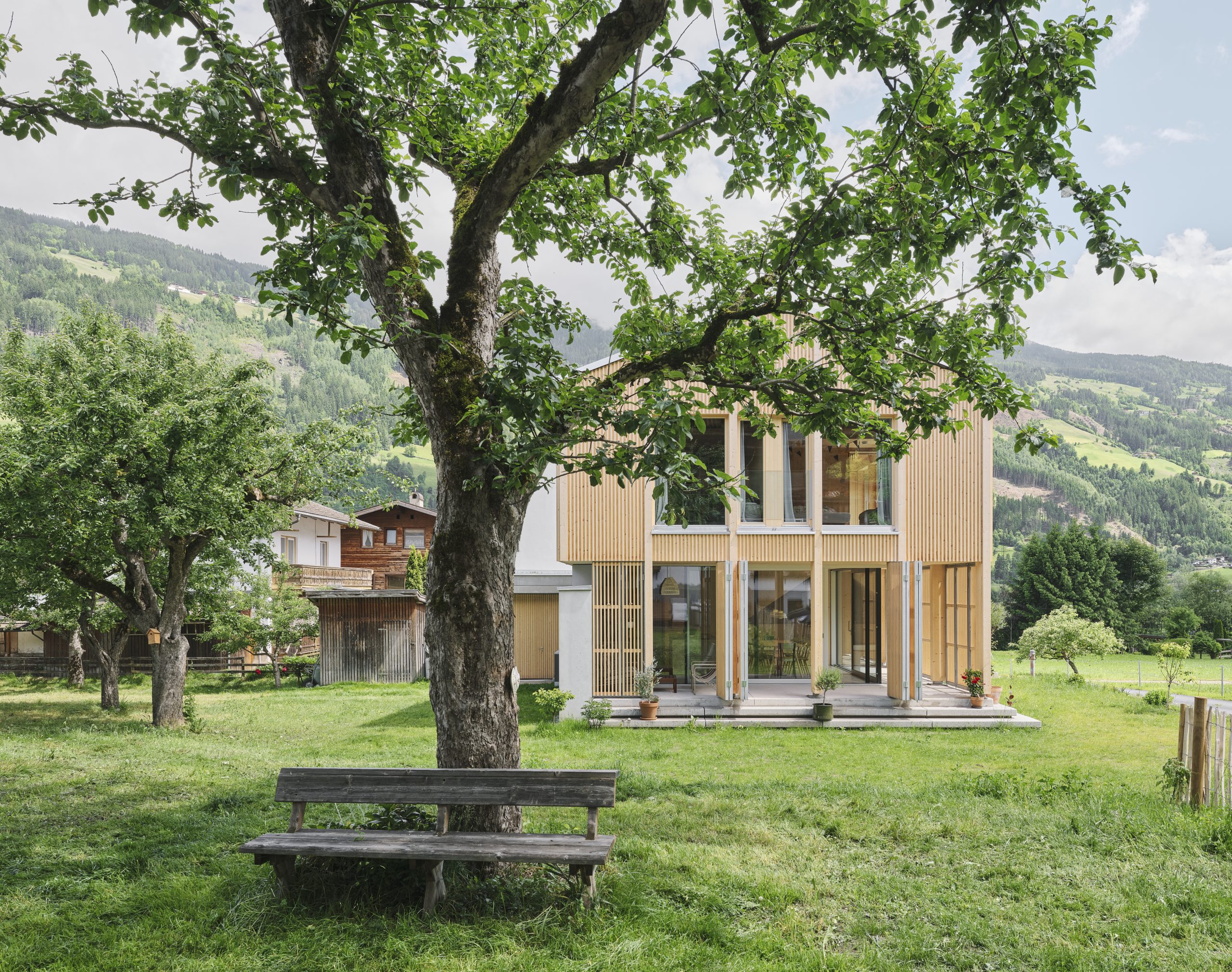
Unisono Architekten describe the house in the language of openness — no fence, no garage, no basement, nothing held back from the street or the neighbors. It’s a real and legible design position, and it shows in the building: a sliding timber skin lets the house open by day and close by evening, shifting between a public face and a private one without changing its footprint.


But reduction here comes a little easier than the language suggests. The house sits on a plot quiet and secure enough that going without a fence reads more as a lifestyle choice than a risk. The absence of a perimeter wall might mean something different on a busier, more exposed site. It’s a small detail worth noting alongside the design itself: openness, here, is also something the setting allows.

Material Honesty, Plainly Stated
The materials follow the same logic of restraint. Reinforced concrete forms the ground floor — grounded, fire-resistant, in direct contact with the earth — while solid timber takes over for the upper floor and roof, left untreated and allowed to weather visibly over time. Heating comes from an air-source heat pump, backed by a rooftop photovoltaic system. None of this is showy; all of it is considered.
At 157 square meters, the House Keiler is not a large building, but it carries a clear idea: that a single-family home doesn’t have to retreat from its surroundings to feel like a home.
Project Gallery